
Parenting Capacity
Your Child Isn't "Struggling" - They're Using Up Everything They've Got
The hard part is that capacity is invisible. You only see it when it runs out.

Some days your child comes home smiling. Other days, they fall apart over something small. You might wonder why today was so hard, why they can manage one day but not the next, and why little things suddenly feel impossibly big.
Here is something important to hold onto: your child may not be difficult, lazy, oppositional, or dramatic. They may simply be running out of capacity.
This is the part most parents miss: school does not just use academic energy. It uses emotional, social, sensory, and executive-function energy too.
The Behaviour You See Is Often the End of the Story
By the time your child argues over shoes, refuses to tidy up, cries because dinner is wrong, or says something feels too hard, they may already have spent the whole day holding themselves together.
They may have listened, sat still, followed instructions, moved through transitions, navigated friendship dynamics, coped with noise, managed mistakes, and stayed regulated enough to get through the school day. You do not see all of that work. You see what is left after it.
A Simple Way to Understand Your Child's Day
One of the easiest ways to understand this is through the idea of units. Think of your child starting the day with a certain number of units for learning, listening, managing emotions, handling change, and staying socially aware.
Every part of the day spends some of those units. Reading instructions costs units. Sitting still costs units. Moving from one activity to another costs units. Being around other children costs units. Staying calm when something goes wrong costs units.
Why Simple Things Stop Feeling Simple
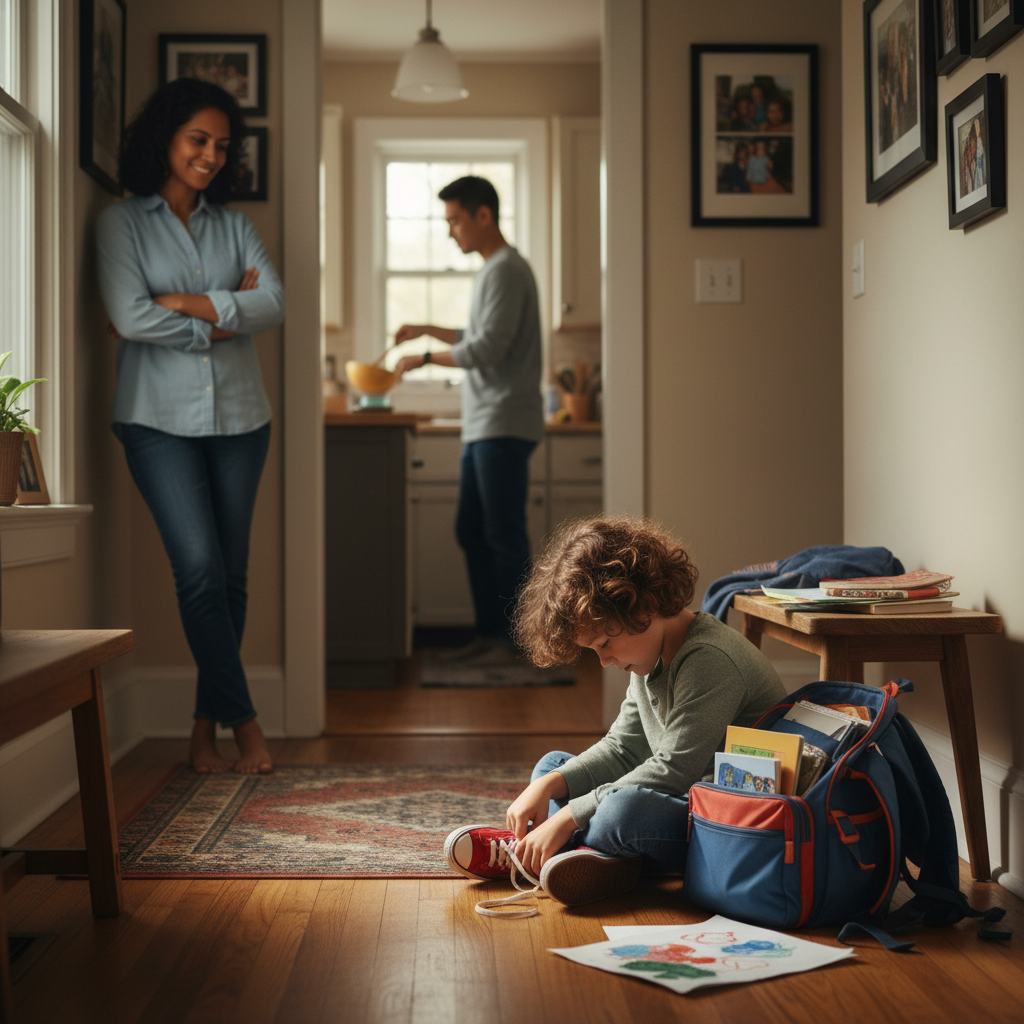
This is why a tiny request can feel huge after school. Put your shoes away. Start homework. Come to dinner. Get changed. For an adult, those things can look simple. For a child who has almost no units left, they can feel like one demand too many.
That does not mean boundaries disappear. It means the way you read the moment changes. Instead of seeing refusal first, you begin by checking capacity.
The School Day Uses More Than You Think
Children do not just use energy for big things like lessons. They use it for sitting still, concentrating, following instructions, transitions, social interactions, coping with noise, dealing with pressure, and adapting to change.
For some children, school uses a large part of their daily energy. For others, it uses almost all of it. That does not automatically mean school is wrong. It means your child is giving a lot to meet the day.
Free parent guide
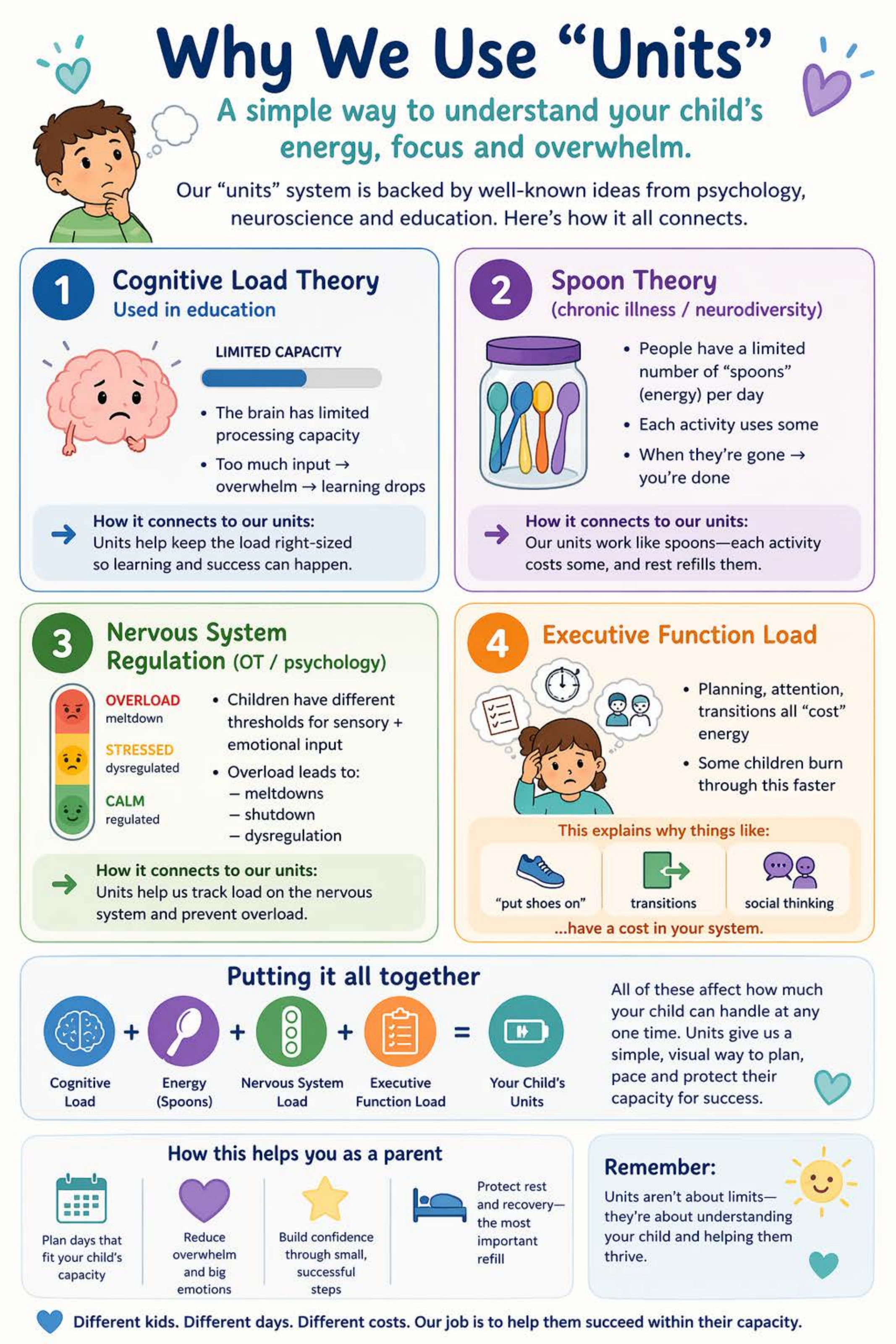
Unlock the visual "Units" guide
See the simple one-page explanation that connects cognitive load, spoon theory, nervous system regulation, and executive function load in a way parents can actually use.
Get the full guide
We will email you the PDF and add you to the SchoolBrowse newsletter for practical parent support.
What You Might Be Seeing at Home
When children have used most of their units at school, you may see big emotions over small things, tiredness that looks like defiance, difficulty with simple tasks, and a strong need for comfort, quiet, or control.
This is not necessarily a step backwards. It can be a sign your child has been working incredibly hard all day.
What Schools Should Be Doing Differently
A strong school does not simply expect children to push through. It notices when a child is reaching capacity. It breaks learning into manageable steps, gives space to reset, reduces unnecessary overload, and adjusts expectations so children can still succeed.
That is not lowering standards. It is recognising that learning only really happens when a child feels safe, regulated, and able to cope.

How You Can Support Your Child
You do not always need to do more. Often, you need to see things a little differently.
Focus on energy, not behaviour
Ask whether they have anything left to give right now.
Protect after-school time
Quiet, downtime, and low demands may be how they refill.
Keep tired moments small
One small step is often better than asking for the whole task.
Remember What You Do Not See
A lot of your child's effort happens quietly during the school day. By the time they get home, you may be seeing the end of their effort, not the absence of it.
Final Thought
This is not about limits. It is about understanding. When we understand how much a child is holding, we can reduce overwhelm, respond with more compassion, and help them feel safe enough to keep trying.
Some children are not giving you a hard time. They are showing you how hard the day has already been.