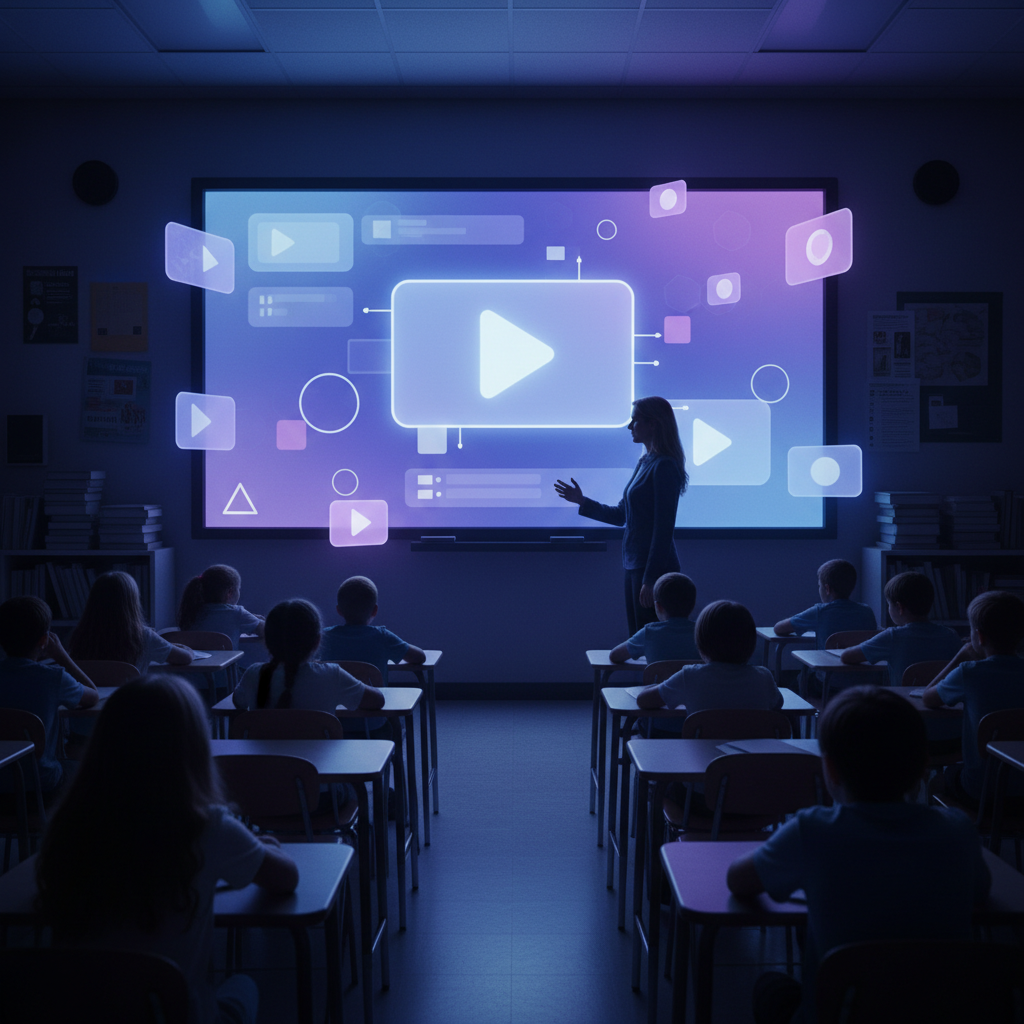
Digital Education Rollback
Denmark's Digital U-Turn
The education experiment that went too far, and why Denmark is now pulling the brakes.

Denmark did not quietly adjust its education policy. It pulled the brakes.
After years of aggressively digitising childhood, placing screens at the centre of learning, normalising constant connectivity, and trusting technology to enhance education, Denmark is now doing something few governments are willing to do publicly:
It is admitting the balance was wrong.
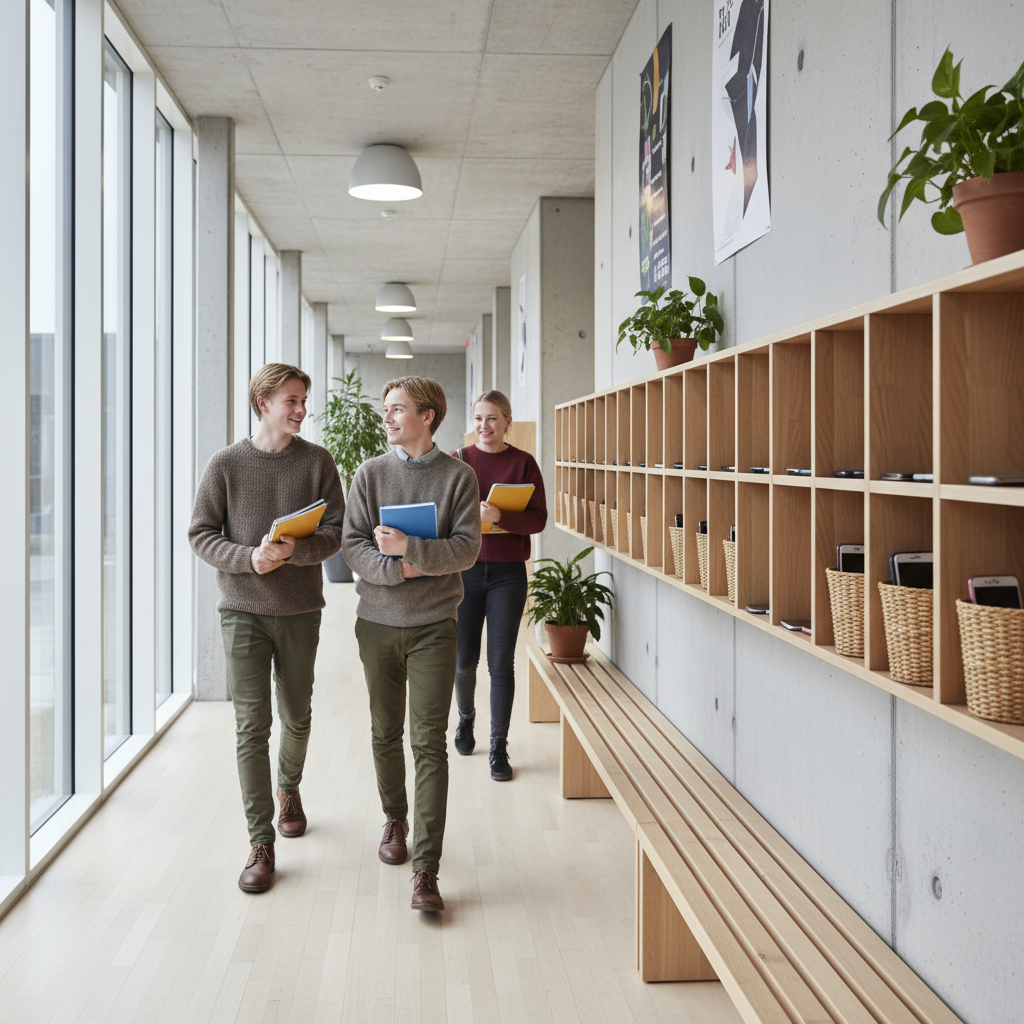
Phones are being pushed out of public schools and after-school provision. Social media restrictions for under-15s have moved from debate to agreement. Classrooms are being encouraged to rebalance toward paper, books, focus, and depth.
This is not anti-technology. It is damage control.
The Policy Shift Is Real
In September 2025, Denmark's Ministry of Children and Education announced a broad political agreement for mobile-free public schools and after-school provision. The ministry said there was a need for better conditions for concentration, immersion, and present social communities.
Denmark has also moved on social media. The government announced an agreement to ban access to social media for children under 15, with limited parental permission possible from age 13. Associated Press reported that Denmark's digital affairs minister said 94% of Danish children under 13 had profiles on at least one social media platform.
And in schools, Denmark has been reassessing digital learning itself. The ministry issued national screen-use recommendations for primary schools and leisure provision in 2024, telling schools to use screens only where they make educational sense, to limit distraction, and to protect concentration.
When a highly digitised country starts removing screens from childhood, the rest of the world should pay attention.
We Were Sold a Vision. It Was Incomplete.
For years, the narrative was seductive. Digital classrooms would democratise education. Screens would engage disengaged students. Technology would prepare children for the future.
So we accelerated.
- More devices.
- More platforms.
- Earlier exposure.
- More digital textbooks.
- More screen-mediated learning.
What we did not ask seriously enough was whether the human brain, particularly a developing one, could absorb this pace without consequence.
The Cost We Chose Not to See
Denmark's reversal did not come from nostalgia alone. It came from accumulated unease: children struggling to focus, concerns about reading, worries about anxiety, isolation, digital dependency, and emotional fragility.
Not every problem can be blamed on screens. That would be too simple. But the pattern became too significant to ignore.
The uncomfortable truth is this: some tools introduced to improve learning may also have undermined the conditions learning depends on.

The Myth of Digital Natives
We told ourselves children were “digital natives,” as if familiarity equalled mastery.
It does not.
Scrolling is not thinking. Tapping is not understanding. Being constantly online is not the same as being intellectually engaged.
In fact, the opposite may be true. When everything is fast, the brain adapts to speed, not depth. When everything is stimulating, attention becomes dependent on stimulation. When everything is easy, resilience quietly erodes.
Denmark is now recognising what should have been obvious: just because children can use technology does not mean it is good for how they learn.
Parents: The Harder Truth
It is tempting to view this as a policy issue, something for governments and schools to fix. It is not.
The digitalisation of childhood did not begin in classrooms. It began at home.
Devices became babysitters. Silence became suspicious. Boredom became something to eliminate. And in the process, we handed children something they were never equipped to manage: unlimited stimulation with no natural stopping point.
Many adults struggle to regulate their own screen use. Expecting children to do better is not just optimistic. It is unrealistic.
What children need
Limits, boredom, movement, books, conversation, real-world attention
What screens offer
Speed, stimulation, instant feedback, infinite novelty
The conflict
The second can quietly weaken the first
Educators: A Necessary Reckoning
Schools are not innocent in this. Somewhere along the line, engagement became the metric.
Lessons had to be interactive. Content had to compete. Attention had to be captured.
But in trying to make learning feel easier, we may have made it shallower.
Real learning is not always engaging. It is often slow, effortful, and uncomfortable. It requires sitting with difficulty, struggling with ideas, and resisting distraction.
Those are not behaviours screens naturally encourage.
Denmark Is Saying What Others Will Not
Here is what makes this moment significant. Denmark is not a laggard trying to catch up. It is a highly digitised society choosing to step back in childhood and education.
That makes its decision much harder to dismiss. If a country that embraced digital systems early is now restricting them for children, this is not resistance to progress. It is a warning.
The Uncomfortable Question
Have we confused modernisation with improvement?
More screens felt like progress. More access felt like advancement. More connectivity felt like opportunity.
But more is not always better. Sometimes, more is simply more.
What Comes Next
Denmark's move will be criticised. It will be called regressive, alarmist, even anti-technology.
But that misses the point. This is not about rejecting the digital world. It is about recognising that childhood is not meant to mirror it.
Children do not need constant access. They do not need endless stimulation. They do not need to be permanently connected.
They need attention. They need limits. They need space to think.
A Quiet Admission
Perhaps the most striking thing about Denmark's decision is not what it changes, but what it admits.
That in the race to prepare children for the future, we may have overlooked what they need in the present.
Correcting that requires something far more difficult than innovation.
It requires restraint.
The future will still be digital. Childhood does not need to be consumed by it.