EdTech + Attention
Your Child's Classroom Is Being Monetised
The dark truth about YouTube in education, and why “it's just a video” is no longer good enough.
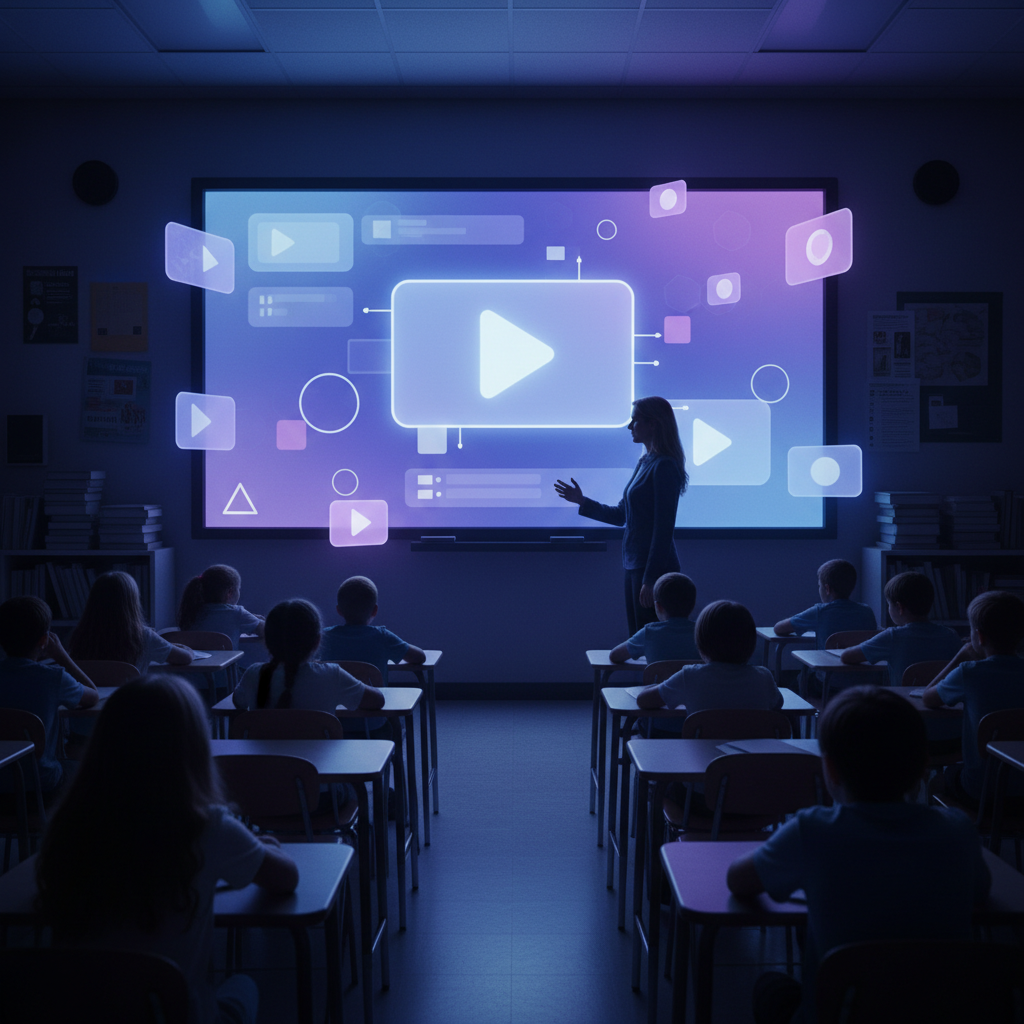
We need to stop pretending this is harmless.
When YouTube says 94% of teachers surveyed globally have used YouTube in their role as a teacher, we are no longer talking about a fringe classroom tool.
We are talking about one of the most powerful advertising and behaviour-shaping platforms ever built becoming normal inside education.
And we are calling it learning.
Let's Be Precise About What YouTube Is
YouTube is not a library. It is not a neutral platform. It is not simply a storage cupboard for educational videos.
It is a commercial video platform inside one of the largest advertising businesses in the world. Alphabet's own financial filings show YouTube ads as a major revenue line, with YouTube ad revenue increasing by billions year over year.
That does not mean every YouTube video is bad. It does mean the platform's core economic logic is not education. It is attention, advertising, and retention.
A video can be educational. The platform around it is still commercial.
And Now It Is Sitting in Front of Children
This is where things stop being abstract. When YouTube enters a classroom, the teacher may intend to show one useful explanation, animation, experiment, or documentary clip.
But the classroom is still borrowing a system designed to capture attention aggressively, reduce disengagement, and keep users inside a loop of continuous consumption.
That is not accidental. It is engineered.
The Algorithm Does Not Care About Learning
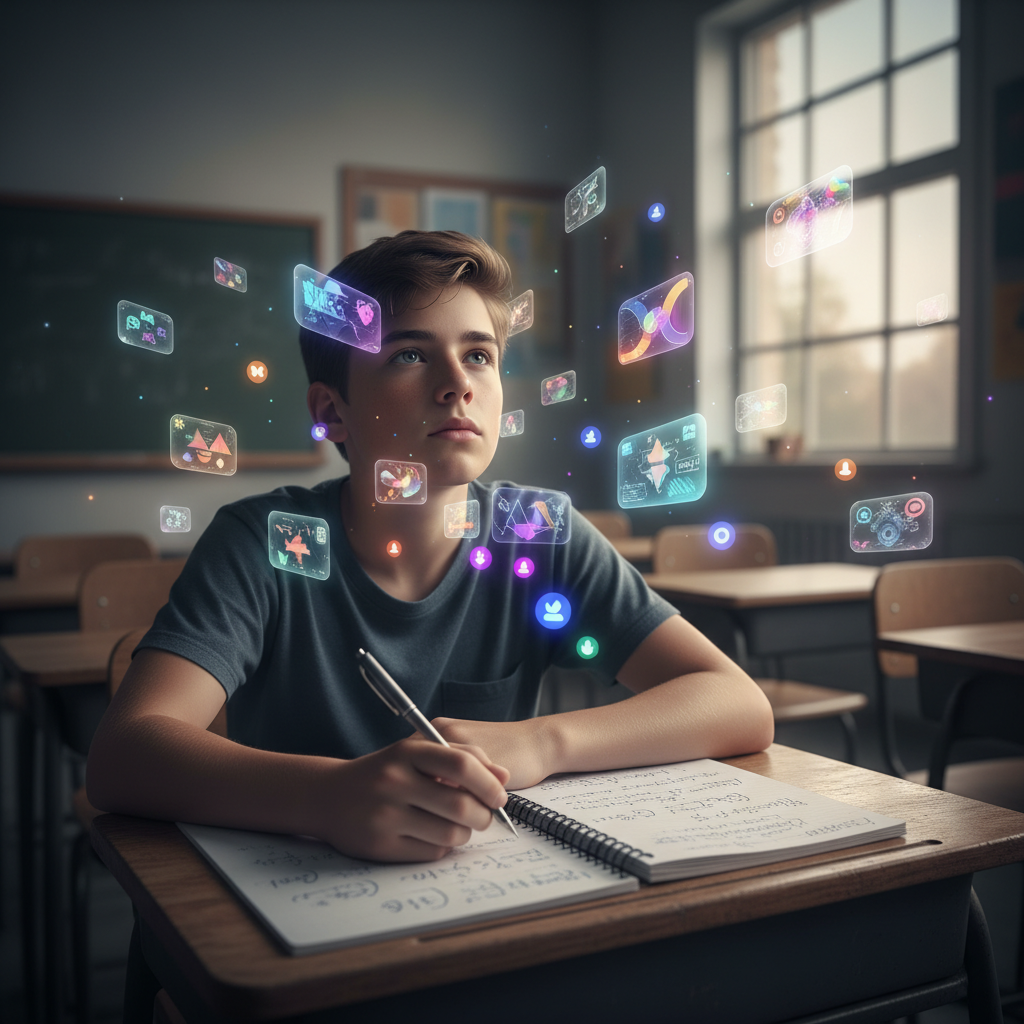
Strip away the comforting language. A recommendation system does not ask: is this helping a child think more deeply?
It asks: what should this viewer be shown next?
YouTube's own help documentation explains that recommendations use signals such as watch history, searches, subscribed channels, and user feedback to personalise what appears next. It also says the system considers satisfaction, not just watch time. That is an improvement in language, but the underlying point remains: the system is optimising platform behaviour, not classroom depth.
Deep thinking is slow. Understanding is effortful. Real learning involves friction. Attention platforms are built to reduce friction because friction loses users.
Cognitive Manipulation, Not in Theory but in Practice
We tend to reserve words like manipulation for extreme cases. But what else do we call a system that tracks behaviour, predicts engagement, and adjusts content in real time to hold attention?
This is behavioural design. And children are particularly susceptible to it.
Their brains are still developing impulse control, reward processing, emotional regulation, and attention management. Which makes them, not coincidentally, a highly vulnerable audience.
From Students to Data Points
There is another layer most people do not consider. Even in restricted environments, platform interaction exists within a larger system of measurement and optimisation.
Patterns are learned. Behaviour is modelled. Attention is quantified.
At some point, we have to ask: are students still simply users, or have they become part of the product system?
The Illusion of “Educational Content”
This is where the defence usually appears: but it is educational content.
Yes. Some of it is. Some YouTube educators are excellent. Some videos explain difficult concepts beautifully. Teachers use them because they are accessible, visual, and often useful.
But educational content still competes inside an ecosystem where thumbnails are optimised for clicks, pacing is designed to prevent drop-off, creators are rewarded for retention, and complexity is often compressed to fit attention patterns.
Over time, even learning content can become shaped by platform pressure: faster, simpler, more stimulating, less demanding.
We Did Not Just Add Technology. We Outsourced Attention.
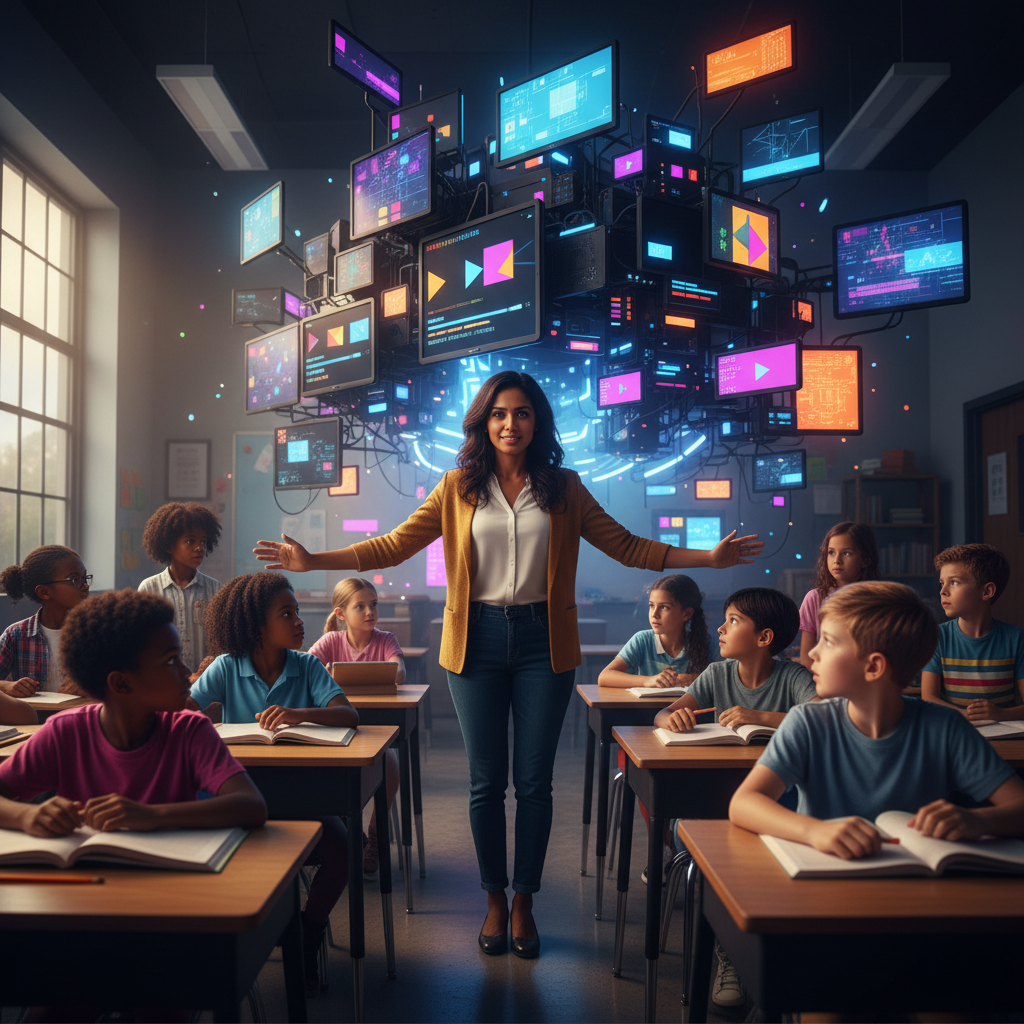
This is the real shift. Teachers used to hold the room. Now, increasingly, platforms do.
Not because teachers are failing. Because they are competing with systems built by engineers, psychologists, designers, and data scientists whose job is to win attention.
That is not a fair fight. And it was never meant to be.
Teacher goal
Understanding, depth, context, discussion, transfer
Platform goal
Retention, engagement, return visits, monetisable attention
Child impact
Learning starts to feel like passive consumption
The Most Uncomfortable Question
If a company profits from attention, and children's attention is being captured in classrooms, then we need to ask something we have been avoiding: who benefits from this arrangement?
This is not a conspiracy. It is a business model functioning exactly as designed.
And We Normalised It
That may be the most unsettling part. There was no scandal. No dramatic turning point. Just gradual acceptance.
A useful tool became a default. A default became dependency. Until one day, it stopped feeling strange that the same platform used for entertainment, influencers, conspiracy rabbit holes, adverts, and endless scrolling was also shaping how children learn.
What This Means Whether We Like It or Not
This is not about banning YouTube outright. It is about recognising the mismatch.
You cannot take a system optimised for attention capture and assume it will quietly behave like a textbook.
It will not. Because it was never designed to.
The Line We Need to Draw
At some point, schools have to decide: is the classroom a place for capturing attention, or for building it?
Those are two very different goals. Right now, we are blurring them.
What Schools Should Do Instead
Use video deliberately, not casually. Prefer ad-free, embedded, school-controlled, or offline versions where possible. Avoid autoplay and recommendation feeds. Pre-select clips. Do not let the platform drive the sequence. Follow every video with active thinking: discussion, writing, retrieval, problem-solving, or creation.
The issue is not video. The issue is letting a commercial attention system become the teacher's silent co-pilot.
Final Thought
We worry about what children watch at home. We regulate what they see on social media. We debate screen time limits.
And yet, in classrooms of all places, we have allowed one of the most sophisticated attention-extraction systems in history to sit at the centre of learning.
Not because it was the best option. Because it was the easiest.
A classroom should build attention, not rent it from a platform that profits when children keep watching.