Home Education
The Smart Way to Homeschool: Blending the Best of Every Curriculum
Homeschooling becomes powerful when you stop trying to copy one system and start building something intentional from the best parts of several.
There is a quiet shift happening. More parents are stepping back and asking a smarter question: what if I did not have to choose just one system for my child?
Because once you really understand how education works, one thing becomes obvious. No single curriculum gives a child everything they need. Not British. Not American. Not IB. Not Montessori. Not Steiner. Each one gets something right, and misses something else.
That is where intentional homeschooling becomes powerful. Not because you leave education behind, but because you get to design something better.
Build, Don’t Copy
Most people approach homeschooling by picking a curriculum, following it closely, and trying to replicate school at home. But that misses the biggest opportunity. The real advantage is that you can take the best parts of different systems and leave the rest behind.
You do not need to find the perfect curriculum. You need to build the right combination.
What Each System Does Best
Before you build, it helps to know what you are borrowing.
British
Structure, clear standards, exam preparation
US
Flexibility, projects, continuous assessment
IB
Inquiry, critical thinking, connecting ideas
Montessori
Independence, pacing, intrinsic motivation
Steiner
Creativity, imagination, emotional development
A blended approach lets you use British structure for what your child needs to know, US-style project work for application, IB for thinking, Montessori for learning habits, and Steiner for imagination and development.

How to Combine Them Without Overwhelm
You do not need to do everything. You just need to be intentional.
1. Follow Development, Not Curriculum
4–9: curiosity and exploration
9–12: understanding and foundations
12–14: structure and responsibility
14+: performance and exams when needed
That becomes your roadmap. The curriculum pieces fit into it, rather than controlling it.
2. Design a Core Week
Instead of thinking in rigid school subjects all day, build a weekly structure around different kinds of learning.
Core Academics
Maths, reading, writing with British-style clarity and consistency.
Inquiry Time
Projects, research, and big questions in an IB-style approach.
Real-World Learning
Cooking, budgeting, building, and problem-solving using US-style application.
Independent Learning
Montessori-style self-chosen work and quiet focus.
Creative Block
Art, music, storytelling, and imagination in a Steiner-style rhythm.
That gives your child range without chaos.
3. Avoid the Freedom Trap
One of the biggest mistakes in homeschooling is trying to do more simply because you can. That quickly leads to burnout, overscheduling, and pressure creeping back in. Homeschooling works best when it feels lighter, not heavier, than school.
4. Shift Your Role
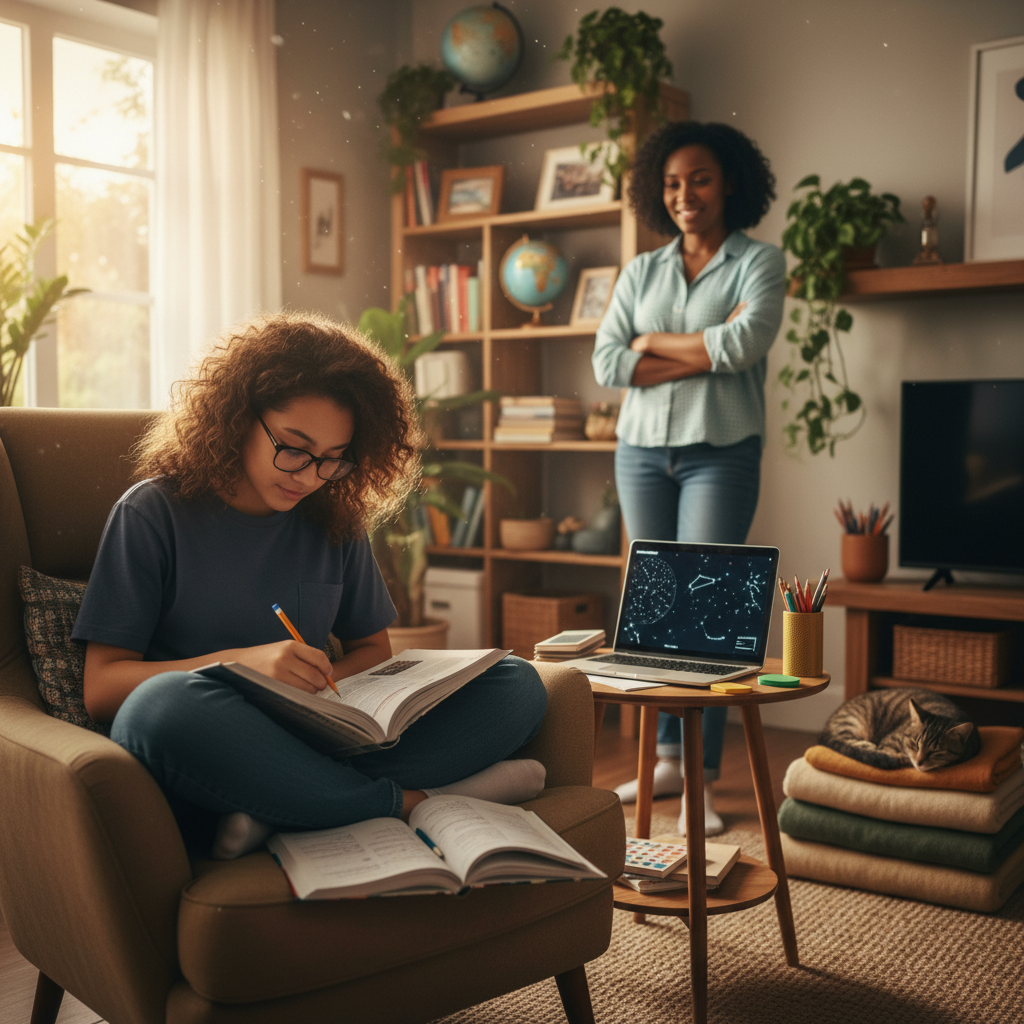
When you homeschool well, you are not simply a teacher copying school at home. You become a guide, an observer, and a designer of environments.
Instead of asking “Did we finish the lesson?” a more useful question is “Did real learning happen today?”
5. Keep an Eye on the Long Game
Homeschooling does not mean avoiding structure forever. It means introducing structure at the right time. As your child grows, you increase expectations slowly, add deadlines later, and prepare for exams when they are genuinely needed.
That means the journey can shift over time:
Early years: curiosity-led
Middle years: knowledge plus exploration
Early teens: more structure begins
Teens: optional exam pathways
Same destination. Completely different journey.
Homeschooling is not about stepping away from education. It is about stepping into it more intentionally.
Final Thought
When you take structure from one system, thinking from another, creativity from another, and independence from another, you do not create confusion. You create something far more powerful: an education that actually fits your child.
The smartest way to homeschool is not to copy one curriculum perfectly. It is to build an education that is structurally sound, emotionally sustainable, and genuinely designed around your child.