
Parent Support
7 Simple Ways to Help Children (and Parents) Handle Anxiety Better
Anxiety can feel big for children and for the adults watching it happen. The good news is that small, consistent actions can make those moments feel calmer, safer, and more manageable.
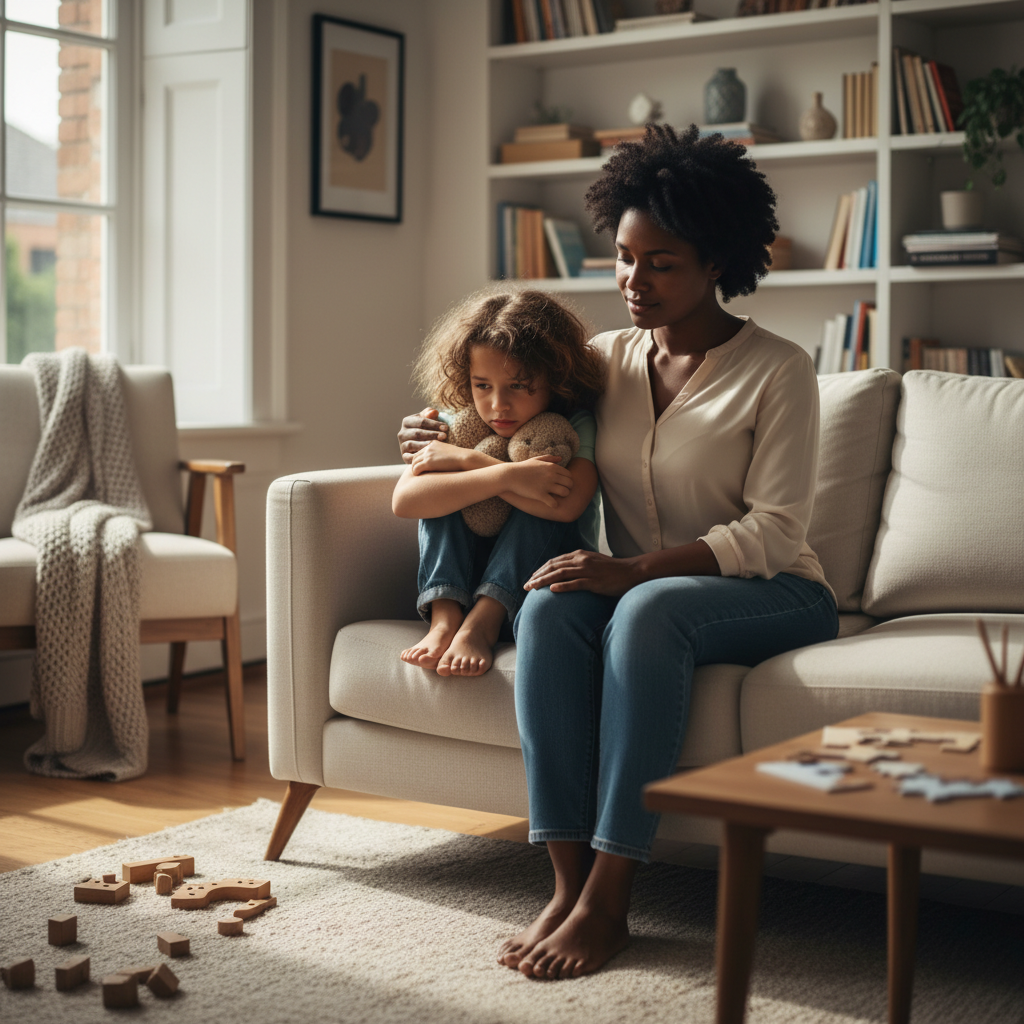
Anxiety can feel big for children and for you as a parent watching it happen. You do not need complicated tools. Small, steady responses make a real difference.
Here are seven practical ways to help a child feel calmer, safer, and more in control when worry shows up.
1. Name What Is Happening
When a child feels anxious, they often assume something is wrong with them. Gently naming the experience helps separate the feeling from their identity.
Try: “It looks like your worry feelings are here.”
“Your body is feeling a bit overwhelmed right now.”
This teaches a child: this is something I feel, not who I am.
2. Calm the Body First, Not the Mind
Trying to talk a child out of anxiety in the moment usually does not work. The body needs help settling before the mind can think clearly again.
Try
Slow breathing: in for 4, out for 6
Try
A hug or calm physical closeness
Try
Quiet time in a calmer space
A calm body helps create a calm mind, not the other way around.
3. Use Movement to Release Stress
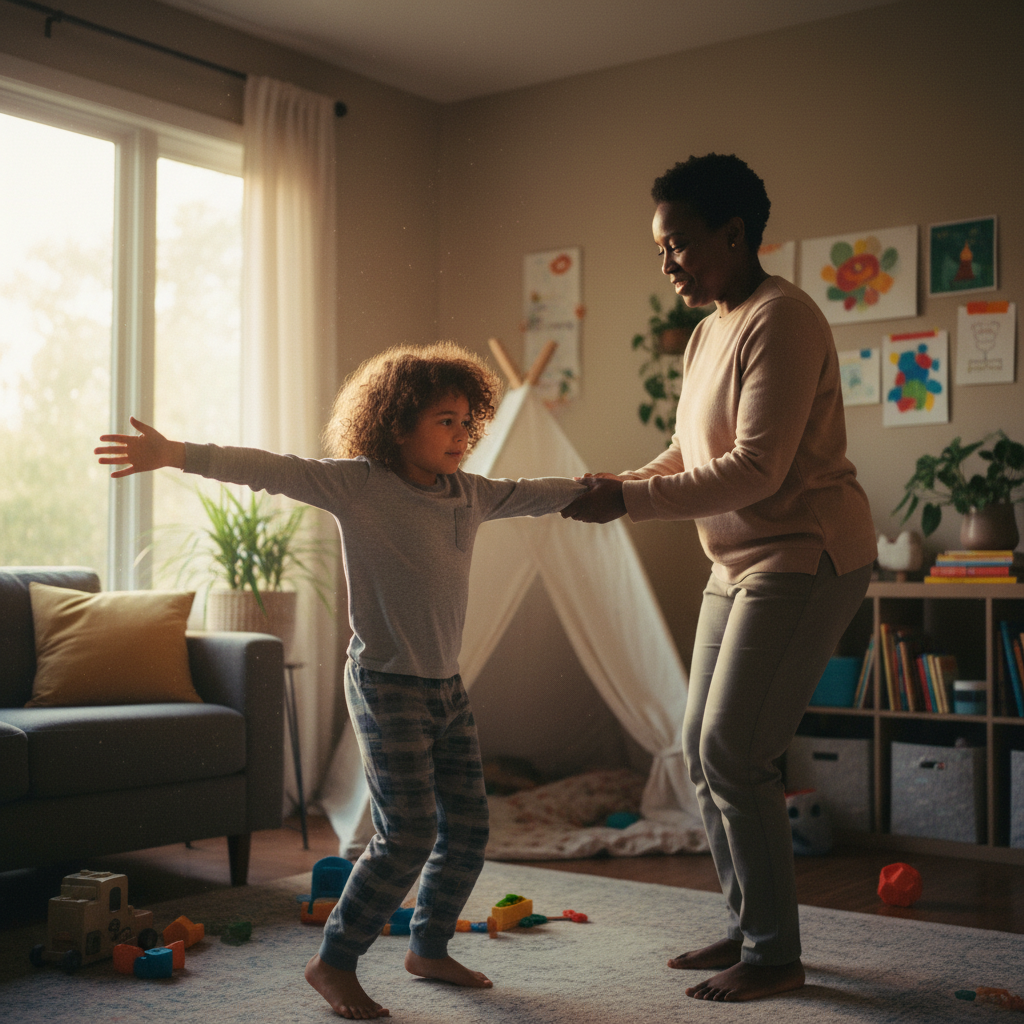
Anxiety builds energy in the body. Sometimes the fastest route back to calm is helping that energy move out rather than trying to suppress it.
Jumping, running, stretching, or even shaking out arms and legs can all help. This is not distraction. It is regulation.
4. Ask Gentle, Open Questions
“Why are you worried?” can feel too sharp when a child is already overwhelmed. Gentler, more open prompts help them feel heard instead of interrogated.
Try: “What feels hardest right now?”
“When does that feeling show up the most?”
That helps them feel understood and less alone inside the feeling.
5. Break Things Into Smaller Steps
Anxiety makes ordinary things feel too big. One of the most helpful things you can do is make the next step feel smaller and safer.
Instead of: “Do your homework”
Try: “Let’s do the first question together.”
Instead of: “Go to school”
Try: “Let’s just get dressed first.”
Small steps feel safer, and safety builds confidence.

6. Focus on Effort, Not Outcome
Anxious children often fear getting things wrong. When you notice and praise effort instead of perfection, you help take some of that fear out of the process.
Try: “I love how you tried that.”
“You kept going even when it felt hard.”
That teaches a child that trying matters more than getting everything perfect.
7. Model Calm, Even When It Is Hard
Children pick up on your state more than your script. If you are visibly tense, rushed, or panicked, they often absorb that too. You do not need to be perfect. But your breathing, patience, and tone all teach something.
Slow breathing. Fewer words. A calmer pace. Those are not small things. They are models.
Anxiety is not something to fix. It is something to support your child through.
Final Note
If your child struggles with anxiety, it does not mean something is wrong. Often it means they feel deeply, think carefully, and are trying to make sense of a big world.
With the right support, those same traits can become strength, awareness, and resilience.
You do not need to do everything perfectly. You just need a few calm, repeatable ways to help your child feel safe enough to keep going.