

The Four-Week Check-In
Five Questions to Ask Your Child This September
Your child says school is fine. Ask these five questions anyway.
The first few weeks of a new school year can be deceptive.
There is the novelty of a new classroom, a new teacher, perhaps new friends, new subjects and new routines. Everyone is finding their feet. Teachers are getting to know their classes and children are working out where they fit.
But around four weeks in, things begin to settle.
And that is a really good time to check in.
The problem is that the question most of us instinctively ask isn’t particularly useful.
“How’s school?”
Fine.
“Are you enjoying your new class?”
Yeah.
“Is everything OK?”
Yep.
Conversation over.
It isn’t necessarily that children don’t want to talk to us. Sometimes our questions simply make it very easy to give us the answer they think we are looking for.
So instead of asking whether school is “good” or “bad”, try questions that reveal something about how your child is actually experiencing their day.
Here are five worth asking.
The Four-Week Check-In
This quiz is for you, not your child. For each of the five questions, choose what is most true right now. Then use the result as a conversation plan, not a score.
You will still get the five questions to ask them afterwards. The quiz simply shows you which conversations are missing.
Answer from today, not their best day
This is about what you actually know, not what you hope is true.
Gaps are useful
Not knowing the answer is the point. It tells you which question to ask this week.
Then go and ask them
The quiz is the map. The conversation is the check-in.
How to listen:
Choose what is most true right now.
What to do next
The five questions to ask
- If you could change one thing about your school day, what would it be?
- When during the school day do you feel most like yourself?
- What is something at school you wish the adults understood about you?
- If you needed help tomorrow, which adult at school would you go to?
- What takes the most energy out of you at school?
Do not turn one interesting answer into an interrogation. If they say “Lunch.”, do not follow with why, who, have you told your teacher. Try “Oh. Tell me about lunch.” And wait.
1. “If you could change one thing about your school day, what would it be?”
Don’t give them options. Let them decide what matters.
You might expect them to say less homework or longer break times. But you might hear:
Or they might genuinely tell you that they wouldn’t change anything.
The interesting part isn’t whether their answer sounds significant to an adult. It is what your child chooses when given the opportunity to change their environment.
Something seemingly tiny may be taking up a surprising amount of space in your child’s school day.
2. “When during the school day do you feel most like yourself?”
This is a very different question from “Are you happy at school?”
Perhaps it is “When I’m playing football at break.” Or “In art.” Or “When I’m with my friends.” Or “When I’m reading in the library.” Or “In science.”
Those answers tell you where your child feels comfortable, competent or connected.
Then, if the conversation allows it, ask: “And when do you feel least like yourself?”
That is where things can get interesting.
A child may be perfectly capable of functioning in a particular environment while using an enormous amount of energy to do it. They may be worrying about getting things wrong, trying to keep up, navigating complicated friendships or working very hard to behave in the way they think adults expect.
You are not looking for a problem. You are trying to understand where your child gets to relax into being themselves, and where they don’t.
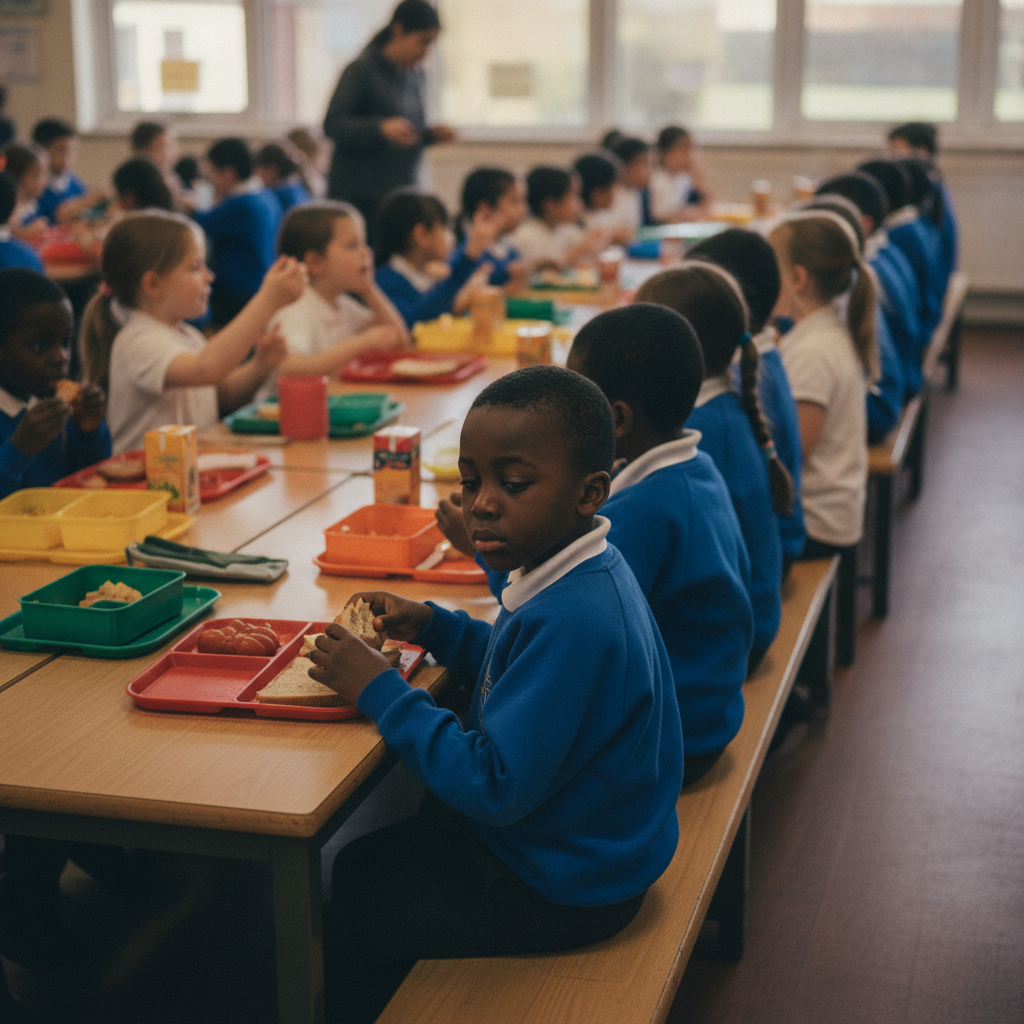
3. “What’s something at school you wish the adults understood about you?”
This question gives children an opportunity to tell you about the gap between what adults see and what they experience.
A teacher sees a child who is quiet
The child might be thinking: “I’m scared I’ll get the answer wrong.”
An adult sees a child who isn’t listening
The child might say: “When everyone is talking, I can’t work out what I’m supposed to do.”
A teacher sees a child happily sitting alone at break
The child might tell you: “I want to play, but I don’t know how to join them.” Or perhaps: “Everyone thinks I’m lonely, but I actually like being by myself for a bit.”
Adults inevitably interpret children’s behaviour from the outside. This question gives your child a chance to tell you what is happening on the inside.
4. “If you needed help tomorrow, which adult at school would you go to?”
You can make this more concrete: “If the work was too difficult, something happened with a friend, or you were really upset, who would you go to?”
This isn’t really a question about whether your child’s teacher is nice. You are trying to discover something more important.
Does my child know who their safe adult is?
If they immediately name somebody, that is reassuring. If they don’t know, can’t think of anyone, or say “I wouldn’t tell anybody”, don’t panic, but don’t dismiss it either.
Try: “What would make it easier to tell someone?”
Their answer may reveal that they don’t know when they are allowed to approach the teacher. Perhaps they are embarrassed. Maybe they are worried about getting somebody into trouble. Perhaps they tried asking for help previously and didn’t feel heard.
Four weeks into school, every child should ideally be beginning to know: when something goes wrong here, there is an adult I can go to.
5. “What takes the most energy out of you at school?”
Children don’t necessarily have words such as anxiety, sensory overload, executive-function difficulty, social pressure or cognitive overload.
But children understand tired.
That last one is particularly worth being curious about.
Equally, your child might shrug and say “nothing really”. That is useful information too.
We are not trying to diagnose children over the dinner table. We are trying to understand where their finite energy is going.
A child can appear to be coping beautifully at school and still arrive home completely depleted by what it takes to maintain that appearance.
And Then Comes the Most Important Part: Listen
If your child says “Lunch.”, try not to immediately respond with:
Why? What’s happening at lunch? Is somebody being mean to you? Who? Is it that child you mentioned last week? Have you told your teacher? What did they say?
You have just turned one interesting answer into an interrogation.
Instead, try: “Oh. Tell me about lunch.” And wait.
Silence can be surprisingly useful. Children will often tell us considerably more when we are curious rather than alarmed.

Ask these questions conversationally, in the car, walking the dog, while making dinner, rather than sitting your child down for the Four-Week School Performance Review. You don’t even need to ask all five on the same day.
Look for Patterns, Not Alarming Individual Answers
The real objective isn’t getting five perfect answers. It is finding out:
Where does my child feel safe?
Where are they spending their energy?
Who do they trust?
Where are they struggling?
Is there anything about their school experience the adults around them haven’t noticed yet?
If the same person, lesson, place or part of the school day keeps appearing in different conversations, pay attention.
Not every difficult moment requires intervention. Children will have friendship disagreements. They will encounter teachers they don’t immediately click with. Some lessons will be boring. Some days will simply be rubbish.
But patterns tell us something. And spotting those patterns four weeks into term gives us an opportunity to understand what is happening before a small difficulty has had months to become a big one.
That is a much more useful back-to-school check-in than “So, are you enjoying your new class?”
Related reading: 7 Questions That Can Change Your Relationship With Your Child This Week, Your Child Isn’t “Struggling”, My Child Hates School. What’s Really Going On?, and A Smart Parent Quiz: How Is My Child Really Doing?