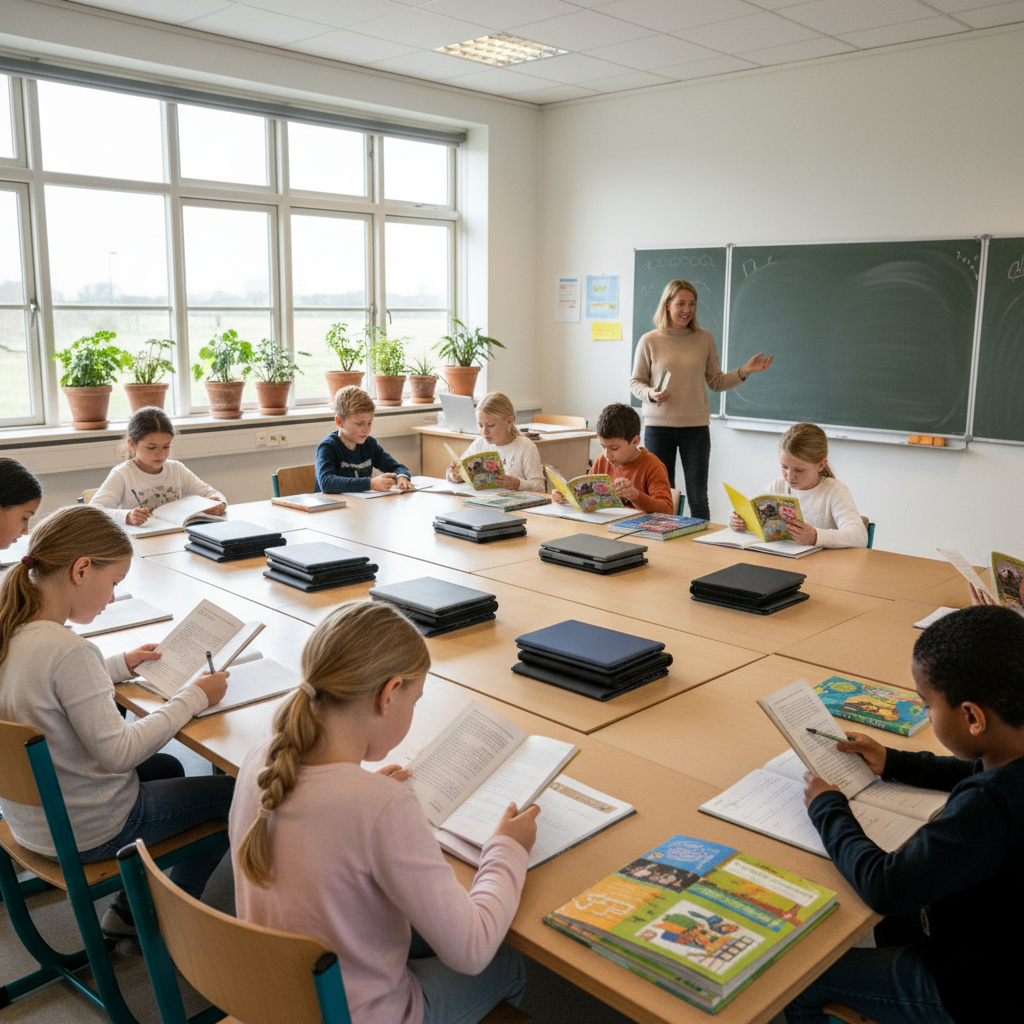
Scandinavian education was admired because it seemed to prove that children could thrive with less pressure, less testing, and more trust. The surprise is that even this model is now struggling with many of the same problems as everyone else.
For years, Scandinavian education, especially Finland, was treated like the holy grail. No exams. Less homework. Happy children. Strong global results. Policymakers visited, educators copied, and countless articles described it as the best education system in the world.
But the same system that was once admired globally is now facing falling results, disengaged students, and rising wellbeing concerns. That makes this conversation far more relevant than it first appears.
The real question is no longer how to copy Finland. It is why even one of the world's most admired systems is now under pressure.

Why Scandinavia Became the Gold Standard
In the early 2000s, Finland stunned the education world. It ranked at the top in reading in PISA 2000, scored highly across maths and science, and was repeatedly praised for its unusually small gap between students.
But what made it so compelling was not just the results. It was the way those results were achieved.
Minimal Testing
Far less standardised testing than most countries relied on.
Teacher Trust
Highly trained teachers with strong professional respect.
Child Time
Shorter school days, more breaks, and play-based early years.
Equity
A strong focus on wellbeing and equality across students.
In simple terms, they appeared to optimise for the child, not just the system.
Then Something Changed
After years at the top, Finland's results began to slide. It dropped out of the very top band in maths after 2012, and scores have declined across reading, maths, and science since their peak years.
The warning signs are not just academic. They are also about mindset, engagement, and student wellbeing.
The Real Warning Signs
- Students are less engaged with school
- Performance is declining
- Belief in effort appears to be dropping
- Some students increasingly feel success is based more on luck than effort
That matters because a system built on trust and intrinsic motivation depends on children still believing that their choices and effort shape outcomes.
It Is Not Just About Academics
More worrying still, rising anxiety, loneliness, and mental health concerns are appearing alongside the academic decline. Additional support needs have increased, and even teacher shortages are beginning to emerge.
In other words, even a system famous for prioritising wellbeing is now struggling with wellbeing.
Why This Matters Beyond Finland
This is not just a Finland problem. Scandinavian systems are now facing distracted students, lower resilience, behaviour challenges, and disengagement, the same issues being reported across the UK, the US, Australia, and elsewhere.
That changes the debate completely. For years people asked how to copy Finland. Now the more useful question is why even the best systems are struggling.
What Actually Made Scandinavian Education Work
It was never just the policy design. It was also the wider context.
- High trust in society
- Strong family structures
- Lower inequality
- High respect for teachers
The system worked partly because the environment around it supported the model.
What Has Changed
Today's children are growing up in a very different world: more screen time, less movement, higher anxiety, and a much faster pace of life. That means even well-designed systems are now being strained by forces outside school.
Scandinavian education did not suddenly stop making sense. The world changed faster than the system adapted.
What The World Should Still Learn From Scandinavia
Despite the pressures, the core principles remain powerful.
- Trusting teachers
- Prioritising wellbeing
- Reducing unnecessary testing
- Giving children time to develop
Those are still strong foundations. The problem is not that they are wrong. It is that they are no longer enough on their own.
What Needs To Evolve
Engagement
A stronger focus on keeping students emotionally and cognitively invested.
Resilience
More explicit teaching of effort, agency, and persistence.
Regulation
Better behaviour and regulation strategies for modern classroom realities.
Clarity
Clearer academic expectations alongside wellbeing support.
Balance is the missing piece. It is no longer academics versus wellbeing. Systems now need both, and neither works properly without the other.
Final Thought
Scandinavian education was never admired because it was perfect. It was admired because it reminded the world that children are not just learners, they are humans.
The bigger challenge now is this: how do we build systems that work for modern children, not the children of twenty years ago?
A useful question to leave with is this: if even the best systems are struggling, what does that tell us about what children really need now?