
The UK education system is not collapsing, but it is under strain. The core leadership challenge is no longer only how to improve results. It is how to create the conditions in which students are actually ready to learn.
Across phases, schools are seeing rising behaviour complexity, declining attention and engagement, increased student anxiety, and growing teacher fatigue. Yet expectations remain high: strong outcomes, measurable progress, and relentless accountability.
That creates a growing tension. The system is being asked to deliver more to students who are often less ready to receive it.
The leadership question has shifted. It is no longer enough to ask how to improve results. We now have to ask how to create conditions in which learning can happen at all.
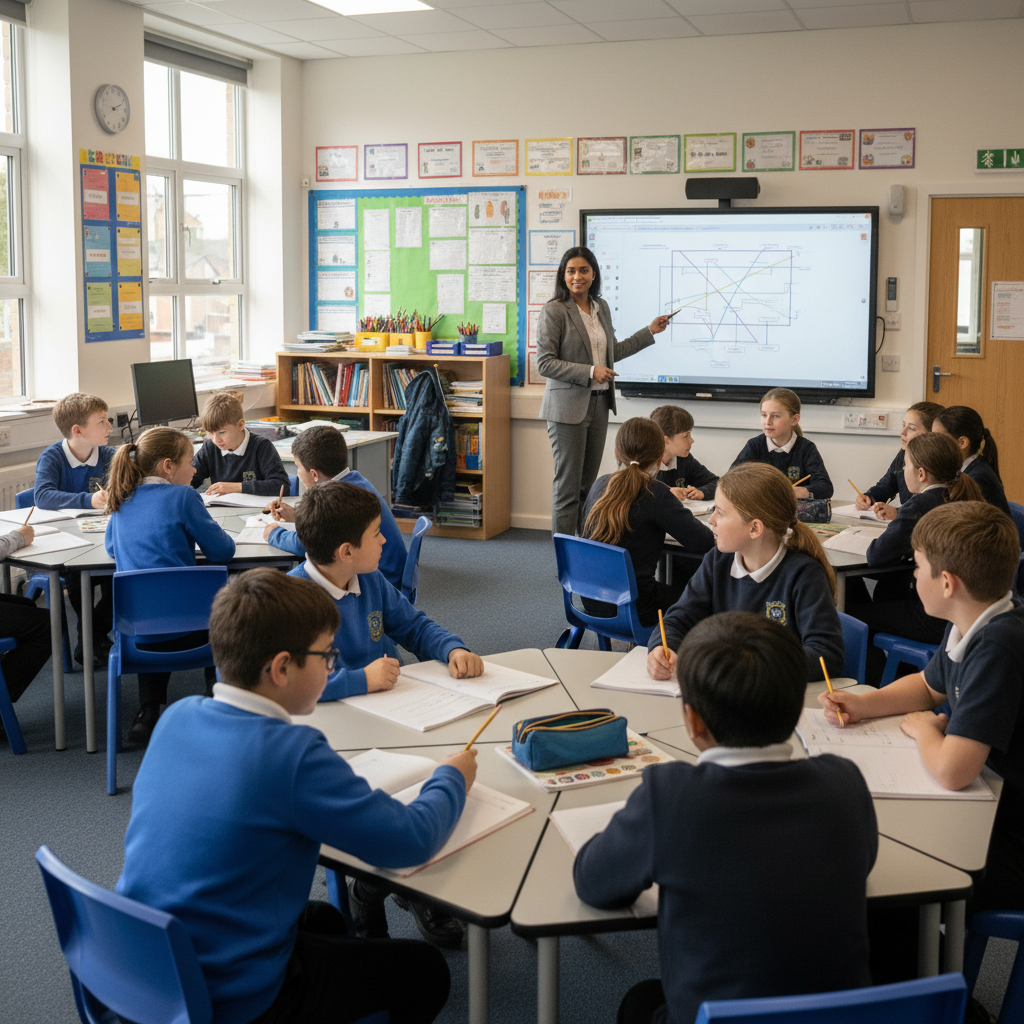
The Emerging Reality in Classrooms
Across the UK, leaders are reporting similar patterns:
- Pupils struggling to sustain attention
- Increased emotional reactivity
- Reduced resilience when learning feels difficult
- More time spent managing behaviour than teaching
This is not a marginal issue. It is becoming systemic.
The Mistake the System Risks Making
The default response is understandable: tighten systems, increase monitoring, reinforce expectations, and add interventions.
These can deliver short-term control. But in isolation they do not address the underlying readiness of the learner.
The strategic risk is that schools become better at managing visible symptoms while becoming less able to address the conditions producing them.
Why Scandinavian Systems Still Matter Strategically
Not because they are perfect. They are not. But they recognised early that learning depends heavily on regulation, engagement, and environment.
That is not a soft insight. It is an operational one.
Strategic Lessons for UK Leaders
1. Regulation is now a leadership issue
This is not just a SEN concern or a pastoral add-on. It is a whole-school condition for learning.
Leaders need behaviour policies that account for dysregulation, staff training that supports early recognition, and classrooms that allow movement and reset.
2. Volume is becoming counterproductive
The current system rewards more content, more assessment, and more intervention.
But cognitive overload is often reducing retention rather than improving it. Leaders should prioritise depth over coverage, reduce low-value assessment, and create space for consolidation.
3. Teacher effectiveness is being constrained
UK teachers are expected to deliver adaptive teaching, relational expertise, and behavioural precision while working inside high accountability and heavy administrative burden.
That is a misalignment. Reducing unnecessary monitoring and increasing professional trust would improve the conditions for high-impact teaching.
4. Behaviour systems need recalibration
Escalation, removal, and consequence remain necessary tools, but they are insufficient on their own.
A more sustainable approach embeds regulation strategies within behaviour frameworks, strengthens de-escalation and co-regulation, and reduces over-reliance on exclusionary responses.
5. Early years pressure is misaligned
The push for early academic outcomes can reduce engagement, weaken long-term learning habits, and create behavioural friction.
Protecting play-based learning and resisting downward accountability pressure into early years is a strategic choice, not a soft one.
What This Should Not Be Misread As
This is not a case for lowering standards, reducing ambition, or removing accountability. Rigour remains essential.
But rigour without readiness increases stress, reduces engagement, and ultimately undermines outcomes.

The Strategic Opportunity
The UK does not need to abandon its strengths. It needs to rebalance them.
Existing Strengths
- Academic rigour
- Structured progression
- Clear accountability
Needed Shifts
- Regulation as a foundation
- Reduced cognitive overload
- Greater teacher autonomy
- Explicit focus on engagement
The real task is to combine rigour with readiness and accountability with sustainability.
The Risk of Inaction
If current trajectories continue, behaviour challenges are likely to intensify, staff attrition will rise, and student disengagement will deepen. Outcomes may hold in the short term, but sustainability will not.
Final Thought
This is not ultimately a debate about pedagogy. It is a question of system design.
The strategic challenge is simple and difficult at the same time: are we designing schools for compliance, or for sustainable learning in a changed world?
A useful question for leadership teams is this: are our current structures increasing readiness to learn, or simply increasing pressure to perform?