Education Inequality
Two Schools. One Country.
What happens when pupils swap worlds, and Britain's education divide stops being an abstract debate.
What happens when you swap worlds?
Not in theory. Not in policy debates. But in real classrooms, with real students, real teachers, and real expectations.
That was the premise behind ITV's School Swap: The Class Divide, a documentary experiment in which a private school head, a state school head, and three pupils from each side spent time in the other school environment. The Evening Standard described the format as private school pupils entering state education for a week, and vice versa.
On paper, it sounded like an experiment in empathy. In reality, it revealed something far more unsettling.
This Was Never Just About Schools
Britain's education divide is often discussed through numbers: funding gaps, class sizes, university progression, and exam results. Those numbers matter. But they do not capture lived experience.
They do not show how confidence is built or quietly eroded. They do not show how expectations are set early and often. They do not show how the environment around a child shapes what that child believes is possible.
The divide is not only academic. It is psychological.
Two Systems, Two Realities
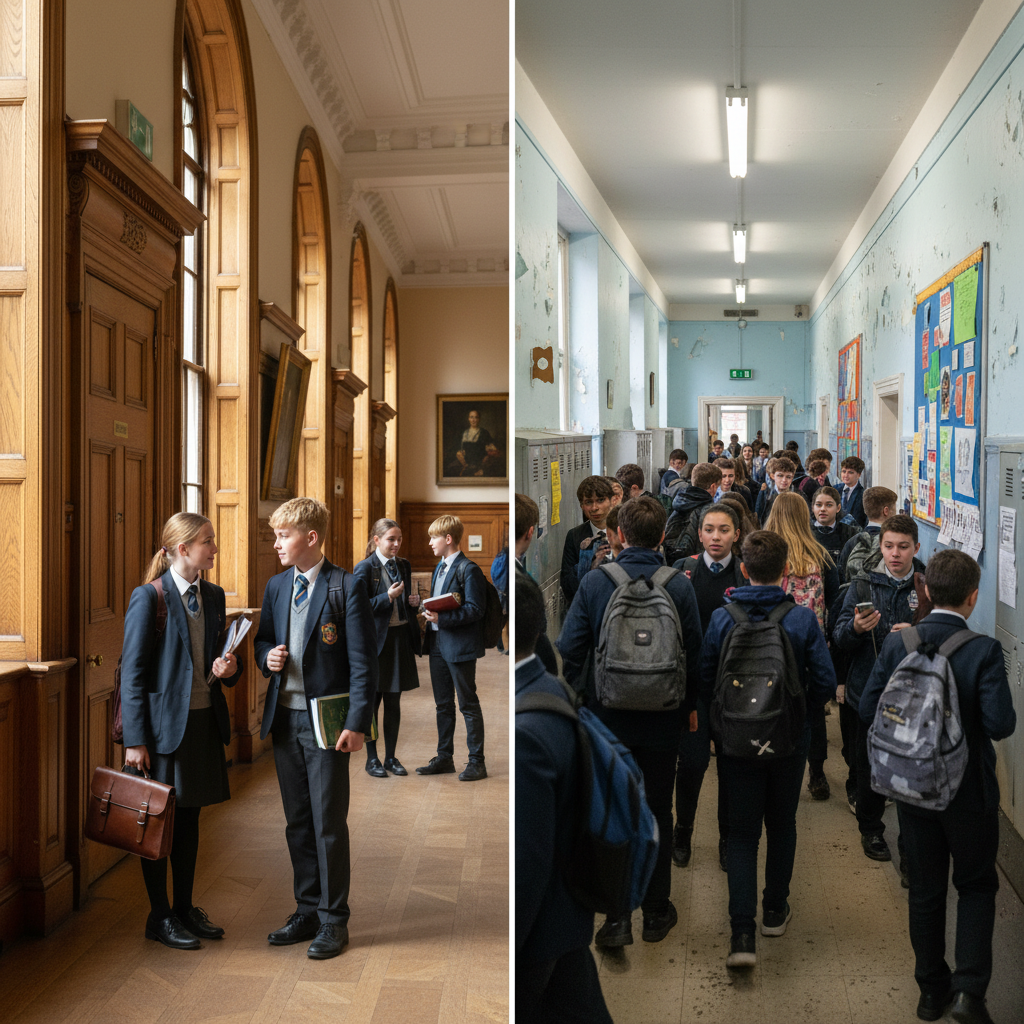
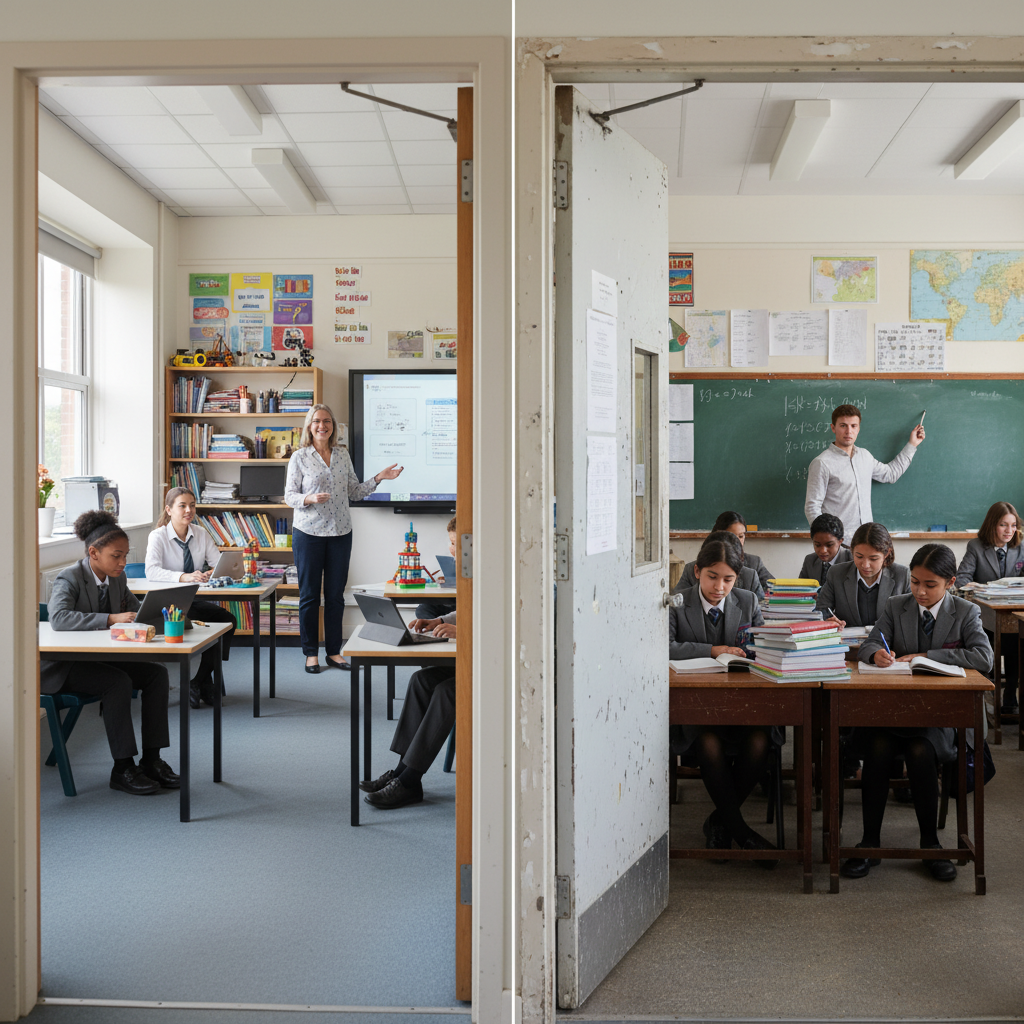
In one world, pupils may experience smaller classes, more individual attention, wider opportunities, and an unspoken assumption of success.
In the other, pupils may experience stretched resources, larger classrooms, fewer safety nets, and success framed as something to fight for.
Both are called education. But they do not always feel the same.
Private school advantage can look like
Confidence, networks, small classes, specialist facilities, and a normalised expectation of progression
State school pressure can look like
Larger groups, stretched staff, fewer extras, and children needing to prove they belong
The Confidence Gap No One Talks About
One of the most striking differences is not academic. It is psychological.
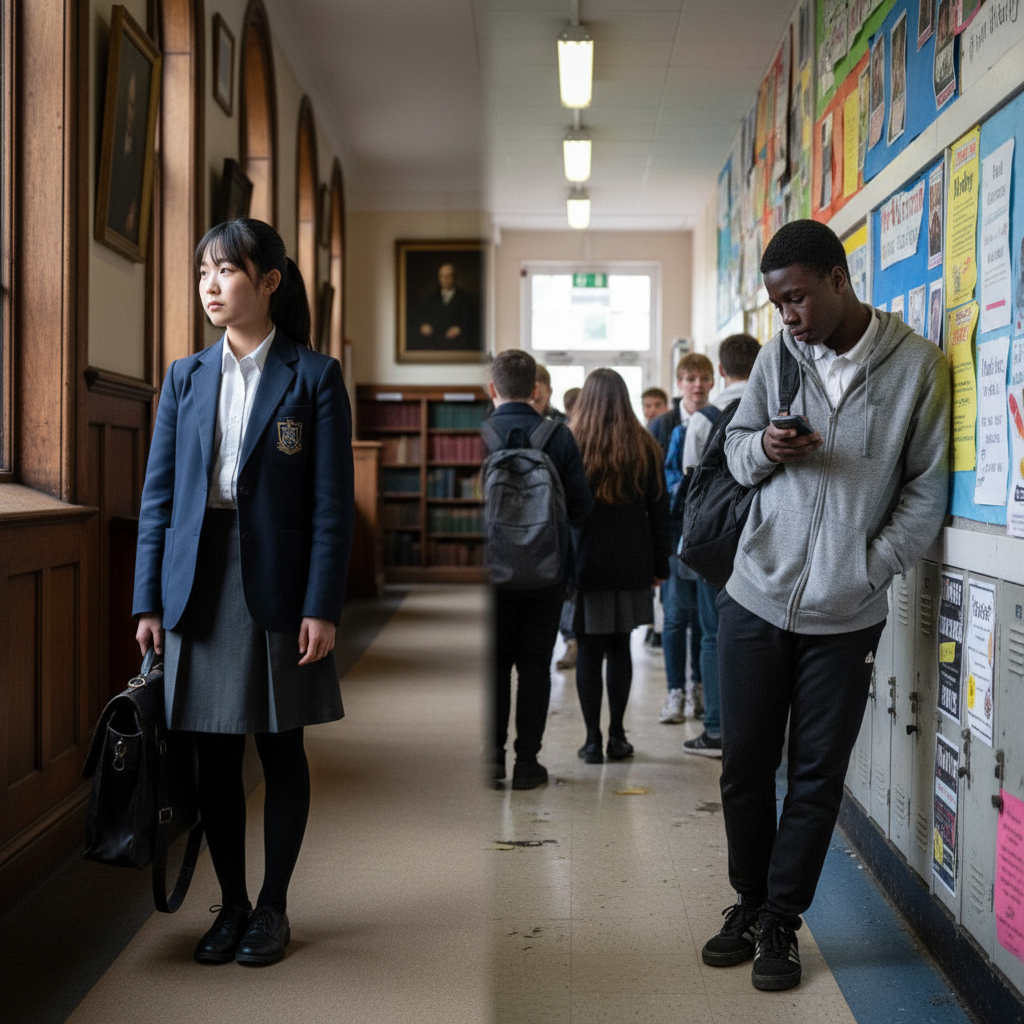
Students from more privileged environments often carry a sense of entitlement to succeed. They may be more comfortable speaking up, questioning adults, taking up space, and entering rooms where power is concentrated.
Not because they are more capable. Because they have been conditioned to expect that they belong.
Meanwhile, Others Are Learning Something Else
Students in under-resourced schools often develop resilience, adaptability, independence, and an ability to manage complexity that should not be underestimated.
But alongside that, something quieter can form: hesitation, self-doubt, guardedness, and a sense of needing to prove themselves before they are allowed to belong.
Again, not because they lack ability. Because the system can subtly signal that they are starting from behind.
When Environment Shapes Identity
This is the part we underestimate. Education does not only transfer knowledge. It shapes identity.
Every school environment answers questions students may never consciously ask:
- Do people like me succeed here?
- Am I expected to do well, or just get by?
- Do adults assume I have potential?
- Do I belong in rooms of power?
Those answers are often embedded in the environment long before exams are taken.
The Myth of Meritocracy
We like to believe education is the great equaliser: work hard, do well, succeed. That belief is comforting because it makes outcomes feel fair.
But experiments like this expose something more complicated. Students are not starting from the same psychological baseline. Some are trained to step forward. Others are trained to hold back.
Over time, that difference compounds.
Private education does not only provide more resources. It can concentrate confidence, networks, opportunity, and expectation, then allow society to call the result merit.
What the Swap Really Revealed
The swap was not only about resources. It was about culture. Expectations. Confidence. Access. The unspoken rules of how to move through the world.
These are harder to measure than funding or grades, but they may be even more powerful in shaping outcomes.
The Discomfort We Should Not Ignore
Because this raises a question many would rather avoid: is the system unequal by accident, or by design?
Private education does not simply sit alongside the state system. It can create a parallel track where advantage is protected, refined, and passed forward.
That does not mean every private school is harmful. It does mean we need to be honest about what the system does.
The Illusion of a Level Playing Field
When students return to their original schools after a week like this, something lingers: the realisation that the differences are not just about personal effort.
They are structural. They are environmental. They are cultural. And once you see that, it is hard to unsee.
This Was a Glimpse, Not a Solution
A week is not enough to change outcomes. But it is enough to expose realities. It shows how deeply environment shapes experience, and how difficult it is to bridge the gap with policy language alone.
You cannot close an education divide only by asking children to work harder. You have to examine the conditions they are working inside.
Final Thought
We often ask how to improve education: raise standards, reform curriculum, increase funding. All of that matters.
But perhaps the deeper question is this: what kind of system are we sustaining when two students in the same country can experience education so differently?
The divide is not only between schools. It is between what children are taught to believe about their place in the world.