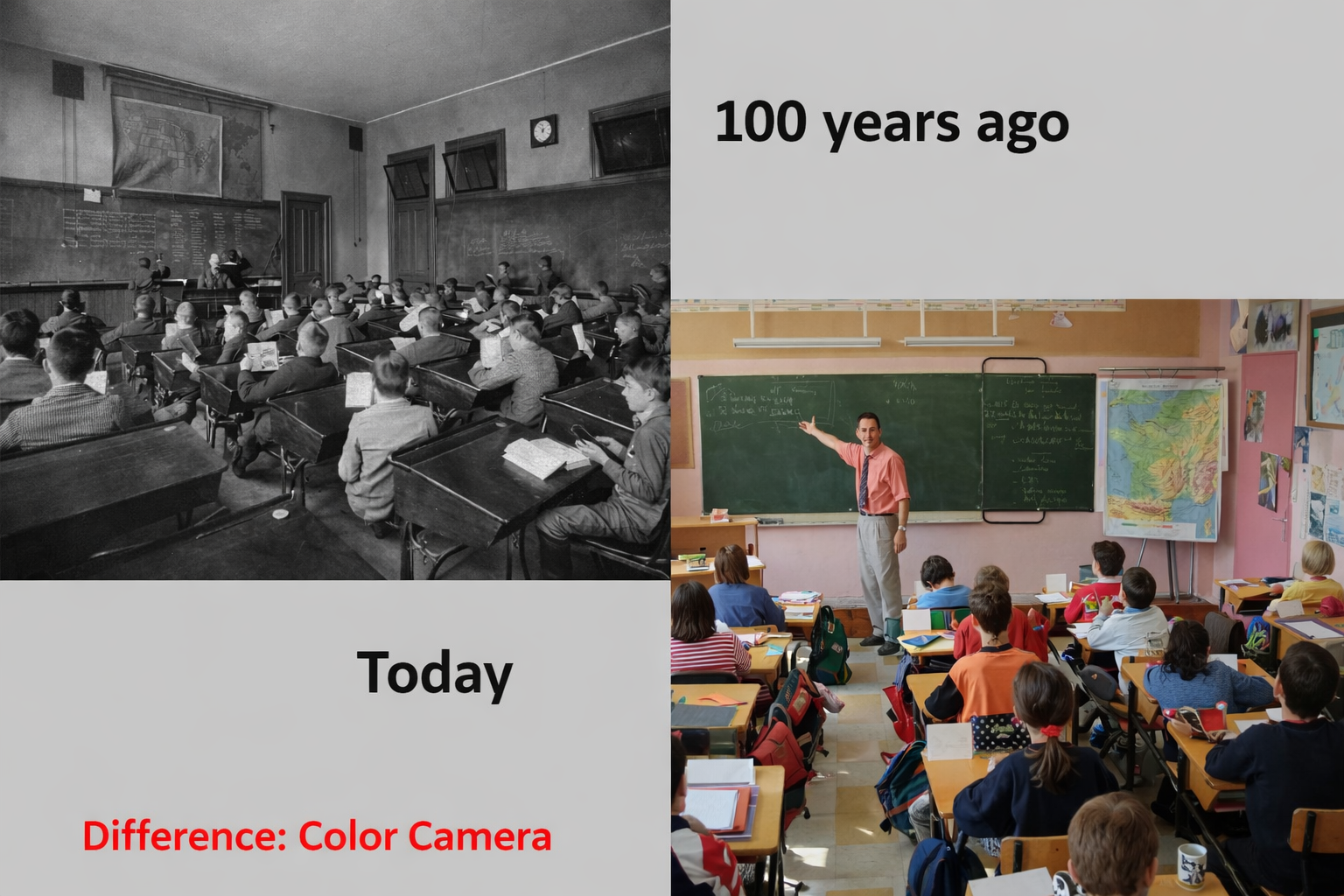
Let’s go back 100 years.
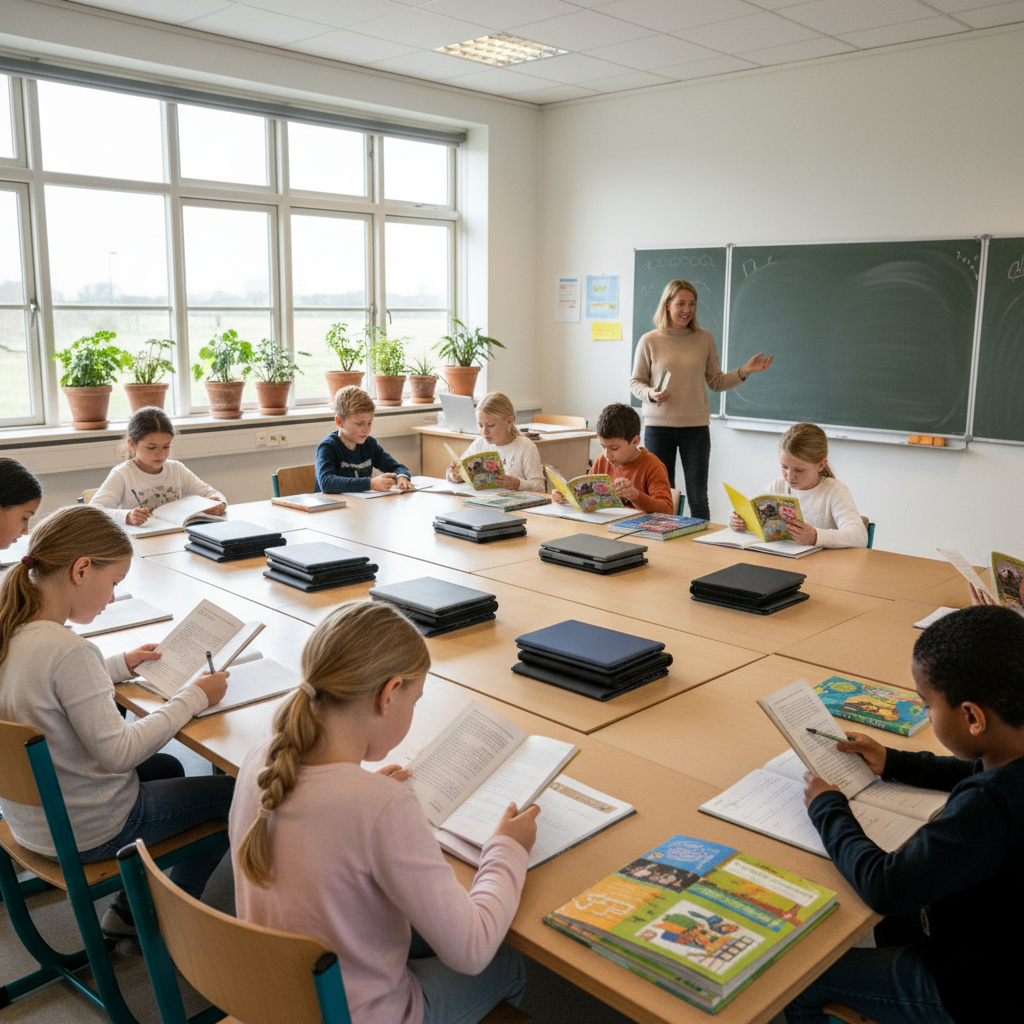
A typical classroom looked familiar in a way that should make us pause.
- Rows of desks
- One teacher at the front
- Students sitting quietly
- Information delivered, then repeated
The goal was clear: prepare children for an industrial world where following instructions, being punctual, staying compliant, and doing repetitive tasks efficiently all mattered enormously.
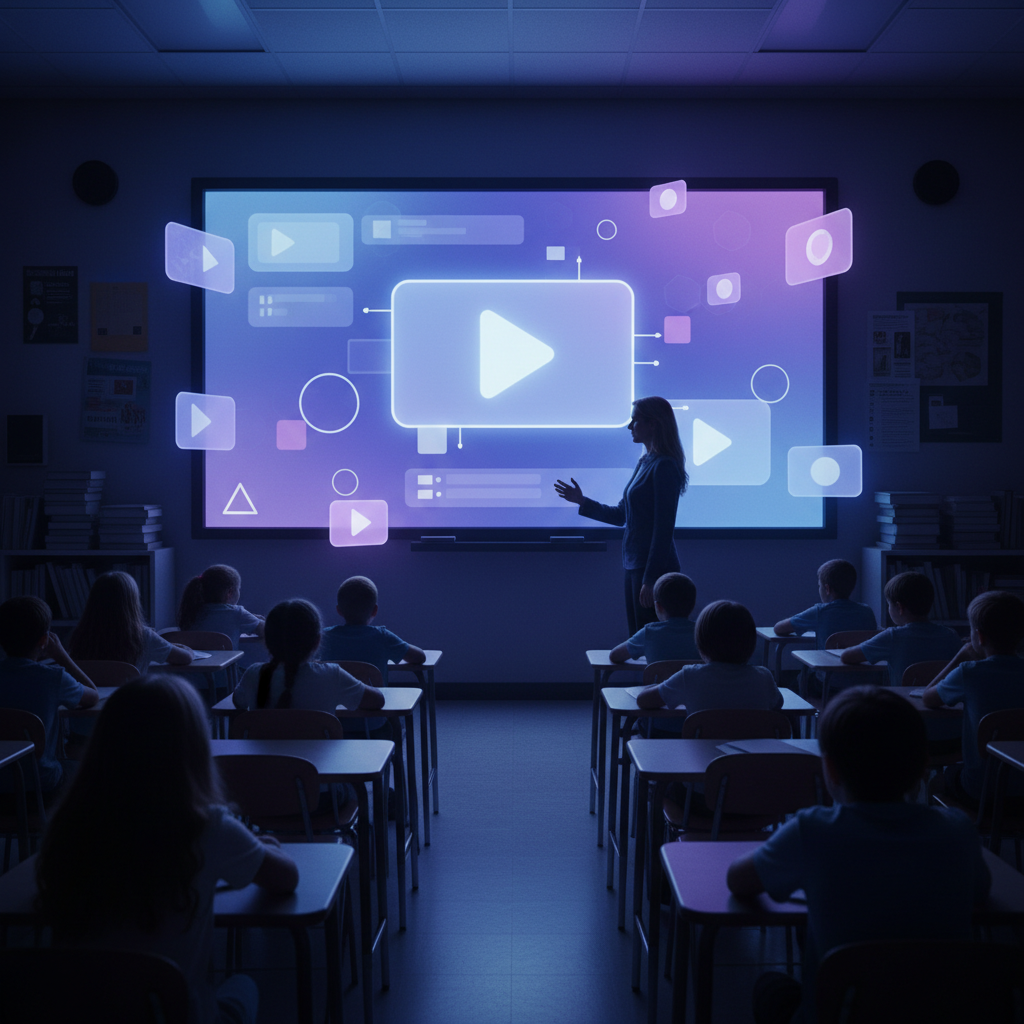
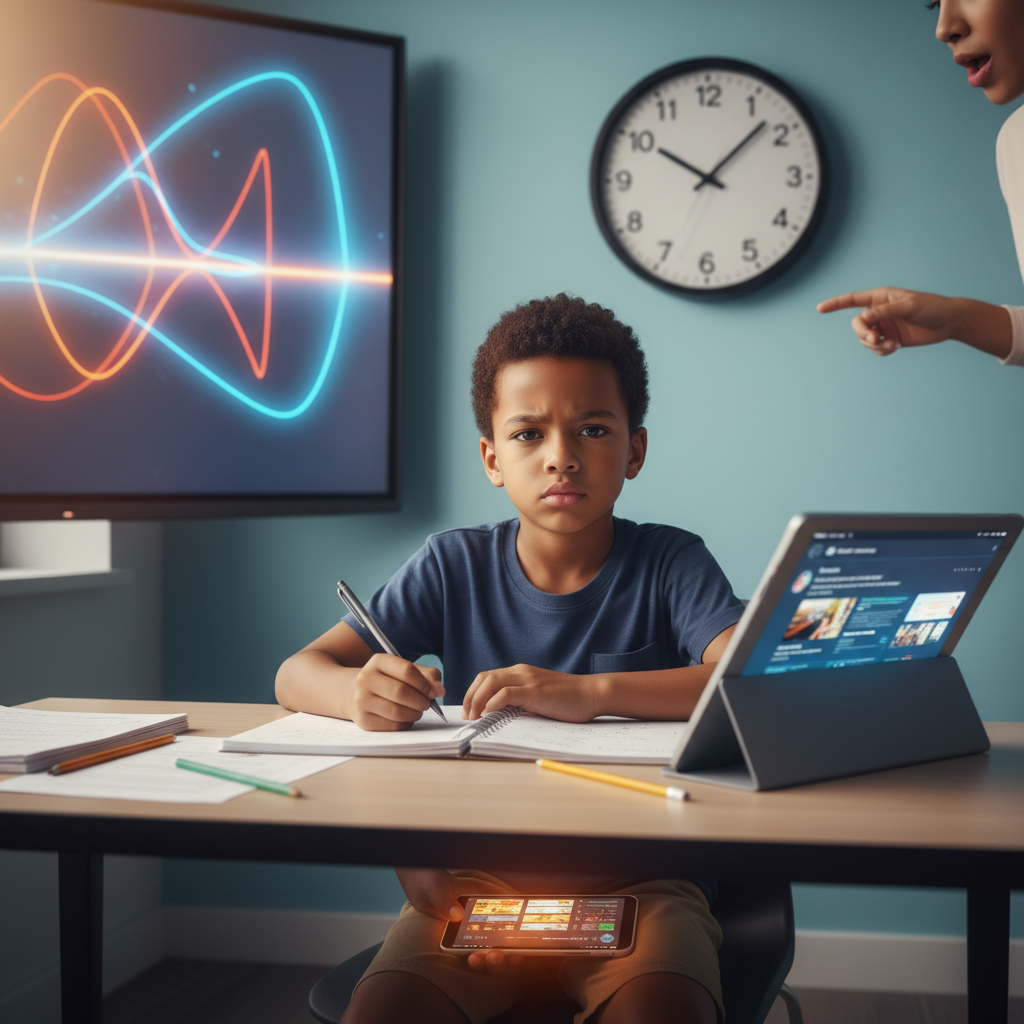
Now fast forward to today. We live in a world of AI, instant information, constant change, and creative, complex problem-solving.
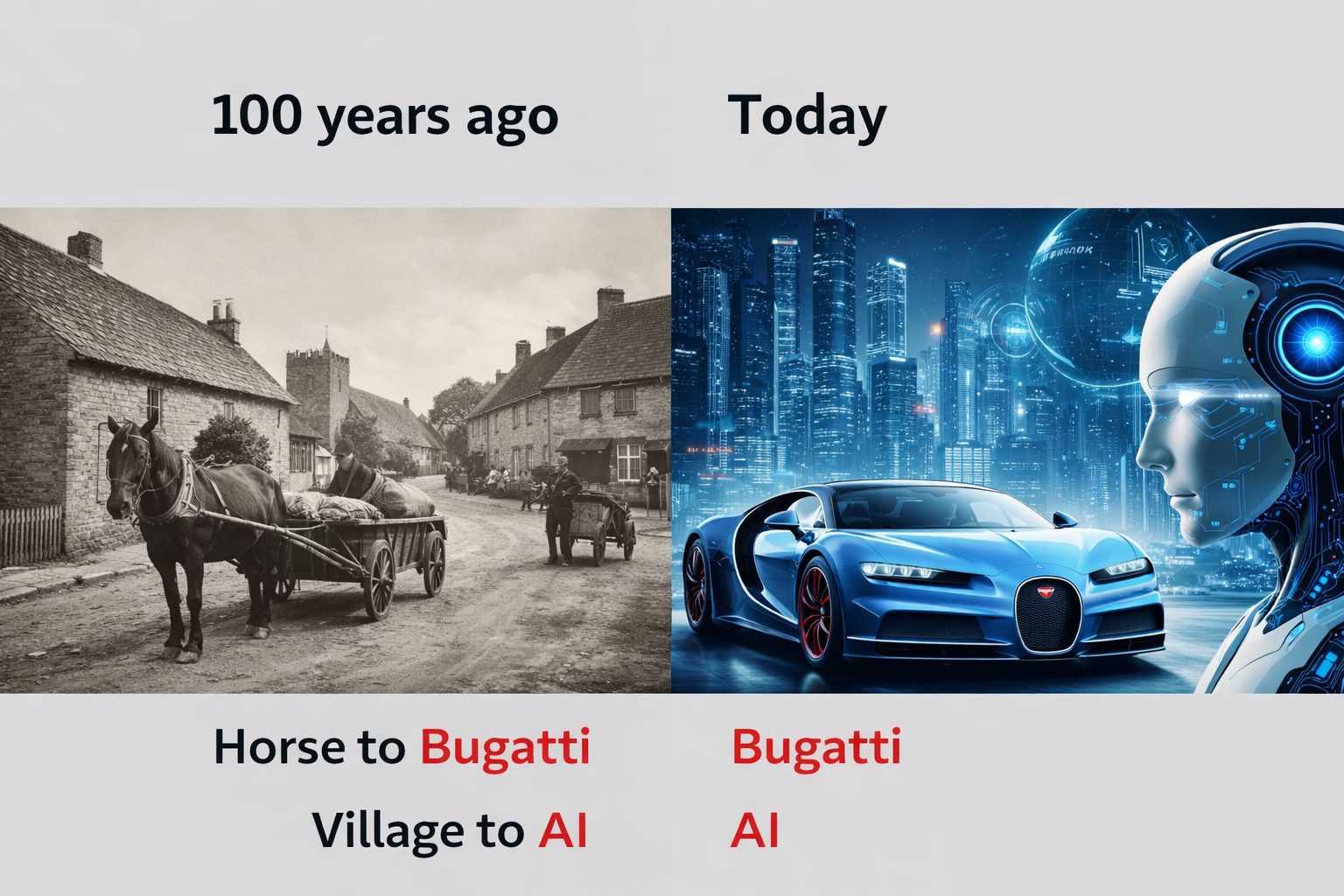
The uncomfortable truth is this: education has changed far less than the world around it.
What School Was Designed For Then
A century ago, schools were designed to standardise learning, process large numbers of children efficiently, and prepare future workers for relatively predictable roles.
Model
Teacher = authority
Model
Student = receiver
Success
Correct answers + compliance
For that era, this model made sense. The world was more fixed. Knowledge was scarcer. Roles were more stable. Obedience and repetition carried more practical value.
What the World Requires Now
Today’s world asks for something different. Children increasingly need critical thinking, adaptability, emotional intelligence, creativity, and self-direction.
These are not skills that develop well through passive learning alone. They need thinking, practice, feedback, reflection, and environments that make room for active participation.
What Should Have Changed, But Often Hasn’t
1. From Memorisation to Learning How to Learn
Then, knowledge was scarce. Now, information is everywhere. The modern advantage is not simply access to facts, but knowing how to learn, think, evaluate, and apply what you find.
What should have changed is a stronger focus on the learning process itself. What often has not changed is an over-reliance on content delivery without enough explicit teaching of how learning actually works.
2. From Control to Understanding
In a factory-style system, obedience was valuable. Today, understanding motivation, behaviour, and emotional development matters much more.
What should have changed is a shift toward seeing behaviour as communication and embedding emotional development into everyday education. What often has not changed is the habit of treating compliance as the main sign that a system is working.
3. From Uniformity to Individual Differences
A more standardised world once made standardisation seem logical. But we now know much more about child development, neurodiversity, and the reality that children do not learn in identical ways or at identical speeds.
What should have changed is greater flexibility and recognition of diverse needs. What often has not changed is the expectation that one format should work equally well for everyone.
4. From Passive to Active Learning
Listening and repeating once defined learning for many classrooms. But strong learning now depends far more on retrieval, application, engagement, and meaningful participation.
What should have changed is a move toward interactive, thinking-based classrooms. What often has not changed is the dominance of long passive lessons with limited student voice.
5. From Ignoring Emotions to Understanding Them
A century ago, emotions were often treated as irrelevant to work and therefore largely irrelevant to school. We now understand something very different: emotions shape attention, memory, behaviour, motivation, and resilience.
What should have changed is explicit teaching of emotional literacy and better support for regulation. What often has not changed is the mindset that emotions should be left outside the classroom.
The Impact of This Gap
When schools do not evolve fast enough, the consequences show up clearly.
- Disengaged students who do not see why learning matters
- Students who do not know how to learn and rely too heavily on memorisation
- Rising anxiety where performance pressure outpaces understanding
- Teacher burnout from trying to meet modern needs with outdated systems
- Persistent inequality because systems often still favour the children who fit the old model best
The risk is not just that schools look old-fashioned. The deeper risk is that children are prepared for a world that no longer exists.
Why Education Feels Behind Other Sectors
It is worth being fair here. Education is not slow because nobody cares. It is slow because schools sit inside large systems, policy constraints, political scrutiny, risk-averse environments, and powerful traditions.
Technology updates constantly. Businesses pivot quickly. Healthcare integrates new research faster than before. Education does change, but often more slowly, more cautiously, and more unevenly.
The result is that education is evolving, but not always at the pace of the world children are actually entering.
What Needs to Happen Next
This is not about abandoning everything from the past. Structure still matters. Knowledge still matters. Teachers still matter enormously.
But schools need to align more closely with what we now know about learning, emotion, development, and modern life.
- Teach children how to learn, not just what to learn
- Embed emotional literacy and regulation into everyday school life
- Balance structure with flexibility
- Support teachers as professionals and as humans
- Prepare students for a changing world rather than a fixed one
Final Thought
Education has not stood still. But it has not moved fast enough.
The opportunity now is not simply to modernise for appearance. It is to build schools that reflect the science of learning, the reality of modern life, and the needs of real children.
The purpose of school should not be to replicate the past. It should be to prepare for the future.
Want more insights into how schools can evolve to meet modern needs? Explore our research-backed guides for parents, teachers, and leaders.