Leadership Feature
Parent Engagement Is Broken
Most schools say they value parent engagement. Far fewer have built a model that actually equips parents to support children in the realities of modern life.

Most schools say they value parent engagement. They have PTAs, coffee mornings, newsletters, and events. And yet parents still feel disconnected.
Schools often feel unsupported. Parents often feel on the outside. And children sit in the middle of a gap that no one quite owns.
What many schools call parent engagement is often surface-level involvement, not true partnership.
The Illusion of Engagement
In many schools, parent engagement means attending events, volunteering, fundraising, or receiving information. Those things can be positive, but they do not automatically create aligned expectations, shared understanding, or consistent support for the child.
Being involved is not the same as being aligned.
Surface
Events, volunteering, newsletters, fundraising.
Missing
Shared language, shared expectations, shared confidence.
Impact
The child experiences school and home as two disconnected systems.

Why This Matters More Than Ever
Children today are dealing with more emotional complexity, more social pressure, more digital influence, and more uncertainty than previous generations. At the same time, schools are being asked to manage behaviour, wellbeing, and academic outcomes, often without fully aligned support at home.
That creates fragmented education, where school and home are not working in sync even when both care deeply.
The question schools need to ask is no longer only how to involve parents. It is how to equip them.
The Shift Schools Need to Make
Parents do not only need information. They need understanding, tools, and confidence. They are expected to help children navigate emotional regulation, behaviour, boundaries, digital risks, and adolescence, often without ever being taught how.
That is why passive communication is not enough. Schools need to start thinking in terms of active parent development.
What Real Parent Partnership Looks Like
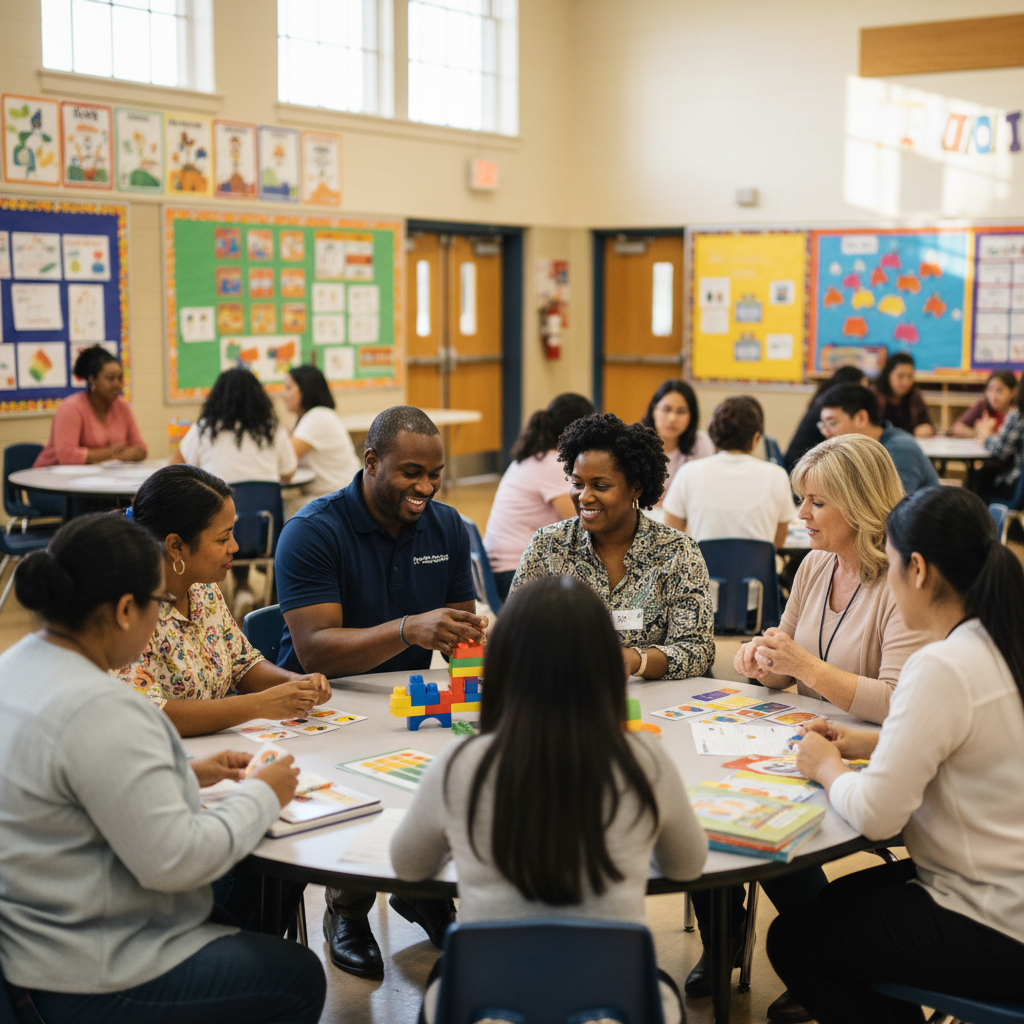
Strong parent partnership means schools create structured, ongoing opportunities for parents to reflect, ask questions, learn, and build capability. It turns parents from passive recipients of information into confident participants in the educational journey.
What Schools Should Actually Be Teaching Parents
A strong parent programme does not only engage. It builds capability. The most useful workshop content usually includes:
- Emotional development and regulation
- Managing rules and boundaries
- Understanding adolescence
- Communication strategies
- Digital risks and social pressure
- Building resilience and wellbeing
- The parent’s role in education
These are not optional extras. They are now essential parts of modern parenting.
Why This Works
When parents are supported, behaviour improves, consistency rises, children feel more secure, and academic outcomes improve. The reason is simple: the child experiences one aligned system instead of two disconnected worlds.
Something else changes too. Parents begin to feel confident, supported, and understood rather than judged, excluded, or unsure. That changes how they show up for their child.
What Schools Need to Stop Doing
- Assuming parents should just know
- Only communicating when something goes wrong
- Offering information instead of development
- Limiting engagement to events and emails
What Schools Should Start Doing
1. Create Structured Parent Learning Programmes
Not one-off sessions, but ongoing parent development.
2. Build Safe Spaces for Honest Conversation
Parents need room to ask, share, reflect, and feel less alone.
3. Teach, Don’t Just Tell
Give parents practical strategies, language, and tools they can actually use.
4. Position Parents as Partners
Not observers at the edge, but co-educators within the child’s ecosystem.
If schools do not actively support parents, they leave a critical part of the child’s development to chance.
Final Thought
Education does not happen in isolation. It happens in classrooms, in homes, in conversations, and in relationships. When schools and parents truly align, the effect on a child can be transformational.
A question worth leaving with school leaders is this: are we informing parents, or are we equipping them to raise confident, capable children?