Walk into almost any school and you'll hear the same language:
We develop independent learners. We teach metacognition. We build critical thinking.
But here's the uncomfortable question:
Are we actually teaching students how to learn, or just expecting them to figure it out?
Because for many children, especially those who struggle, the reality is this: they are being asked to succeed in a system without being taught the skills to navigate it.
What Is Metacognition, And Why Does It Matter So Much?
Put simply, metacognition means thinking about your own thinking.
Metacognition helps students
Know what they understand
Metacognition helps students
Choose the right strategy
Metacognition helps students
Reflect and adjust
Students who use metacognitive strategies can make months of additional progress compared with those who don't.
The Problem: It’s Talked About More Than It’s Taught
Metacognition has become a buzzword. But in many classrooms it still looks like occasional reflection tasks, vague prompts such as “check your work,” or the assumption that students will somehow pick it up over time.
That is not teaching a skill. That is hoping.
What Happens When We Don’t Teach Students How to Learn
01
Students Blame Themselves Instead of the Strategy
Instead of thinking, “this strategy isn't working yet,” many conclude, “I'm just not good at maths,” or “I can't do this.”
02
They Rely on Ineffective Habits
Rereading notes, highlighting everything, and cramming all feel productive, but they often produce very weak learning.
03
They Struggle to Become Independent
Without strategy awareness, students depend heavily on teachers and often do not know how to approach unfamiliar challenges on their own.
04
The Gap Widens
Students who accidentally discover effective strategies move ahead. Those who do not fall behind, not because of ability, but because of access to learning strategies.
The Truth: Learning Is a Skill, And It Must Be Taught
We explicitly teach reading, writing, and maths. But often we fail to explicitly teach how to learn, even though that skill underpins everything else.
What Teaching “How to Learn” Actually Looks Like
Not theory. Not posters. Explicit, practical instruction.
1. Teach students how memory works
Learning means remembering. Forgetting is normal. Retrieval strengthens memory. When students understand this, their approach changes.
2. Teach specific strategies, not just advice
Show them retrieval practice, spaced repetition, and interleaving. Demonstrate it. Practice it with them.
3. Make thinking visible
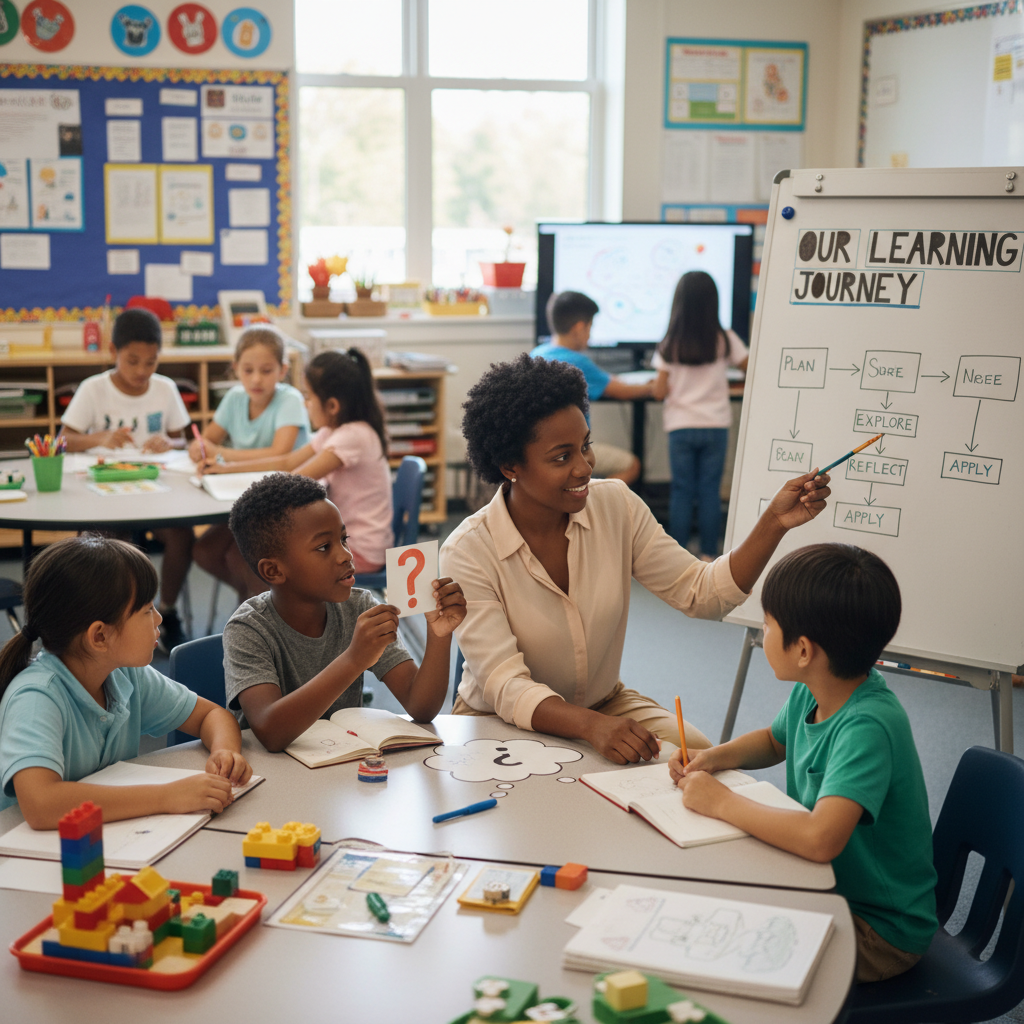
Ask: How did you solve that? What strategy did you use? What would you do differently next time?
4. Normalise struggle as part of learning
Difficulty does not mean failure. Difficulty often means learning is happening.
5. Build reflection into the process
What worked? What didn't? What will I try next time? Reflection turns experience into improvement.
What Schools Can Do, Realistically
- Train teachers in learning science, not just content delivery
- Build metacognitive strategies into everyday lessons
- Move beyond surface-level “learning to learn” language
- Create shared approaches across departments
This is not extra. It is foundational.
What Parents Can Do at Home
You do not need expertise, just awareness.
Ask better questions
Try: How did you learn that? What helped you remember it?
Talk about learning, not just results
Ask what worked well and what they would try differently next time.
Encourage better study habits
Guide children toward testing themselves, explaining ideas out loud, and revisiting material over time.
Praise strategy, not just outcome
Instead of only saying well done for getting it right, highlight the method that helped them succeed.
The Bigger Issue: Teacher Awareness
Many teachers were never taught this themselves. So we end up with brilliant subject experts who were never properly trained in how learning actually works.
This is not a criticism. It is a gap in the system.
The Shift We Need
We need to move from teaching content to teaching how to learn content. We need to stop assuming students know what to do and start making those processes explicit, visible, and practised.
Final Thought
If we truly want independent learners, confident students, and better outcomes, we need to stop treating “learning how to learn” as a slogan and start treating it as a core skill.
The students who succeed are not always the smartest. They are often the ones who understand how to learn.
Want more insights into what actually improves learning in schools? Explore our research-backed guides and discover what makes education truly effective.