
Every few years, the headlines return.
Country X rises in PISA rankings. Standards are falling. The education system is in crisis.
Schools react. Policies shift. Pressure increases. New initiatives are launched.
But the problem is that many leaders are reacting to the noise rather than understanding the signal.
To lead well, you need to step back and see the macro picture of education.
What Is the Macro Picture in Education?
It is the ability to understand global trends, system-level patterns, and long-term shifts in learning, behaviour, and wellbeing.
Not just what is happening in your school, but what is happening to education as a whole.
What Is PISA, And Why Does It Matter?
PISA, the Programme for International Student Assessment, tests 15-year-olds globally in reading, maths, and science.
Importantly, it focuses on application of knowledge rather than simple recall.
That makes it useful. But it also makes it easy to overinterpret.
A high PISA score does not automatically mean a better education system. It is a signal, not the whole picture.
PISA reflects curriculum design, culture, teaching methods, and wider socioeconomic conditions. It can help leaders ask better questions, but it cannot answer all of them on its own.
What the Global Data Is Actually Showing
Across many systems, similar patterns are emerging.
1. Attention and deep thinking are under pressure
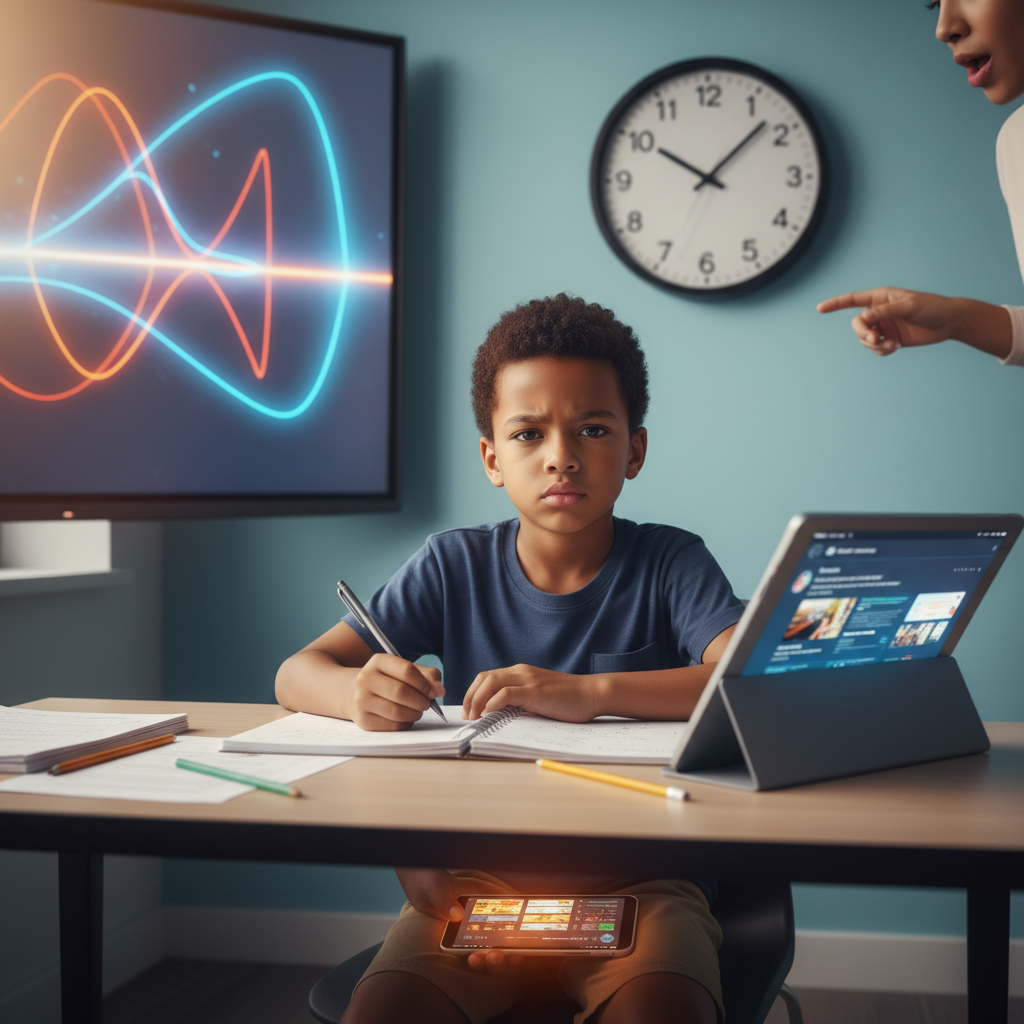
Extended focus is becoming harder for many students. Reading stamina is weakening. Surface-level learning is replacing deeper engagement.
Digital habits and reduced reading culture are likely part of the story.
2. Anxiety and wellbeing are now central educational issues
Even in high-performing systems, student stress is rising. Pressure can produce outcomes, but often at a cost.
Mental health is no longer separate from academic performance. It is one of the conditions that shapes it.
3. Gaps between students are widening
In many systems, high performers remain strong while lower performers fall further behind.
That means inequality is growing, not shrinking, and leaders need to think carefully about who is being left out by current practice.
4. Knowledge still matters
For all the language around skills-based learning, systems with strong knowledge-rich curricula still tend to perform better.
Knowledge remains the foundation that allows reasoning, transfer, and critical thinking to happen.
5. Teacher quality remains the biggest in-school factor
Across systems, the most reliable driver of success is still teacher effectiveness.
Not buildings. Not technology. Not slogans. Teachers.
The Danger of Misreading the Trends
Many systems respond to disappointing data in exactly the wrong way.
- More testing
- More pressure
- More accountability without more support
That often worsens anxiety, teacher burnout, and shallow learning.
Another common mistake is chasing rankings by copying high-performing countries without understanding their context. What works in one system does not simply transfer into another.
What Strong Leaders Do Differently
Strong leaders do not ignore the data. But they interpret it intelligently.
1. They separate signal from noise
They ask what the data is really showing, not what headline is being pushed.
2. They balance performance with wellbeing
High performance without wellbeing is not a sign of success. It is a sign of fragility.
3. They focus on first principles
Rather than chasing trends, they return to what we know works:
- Memory and knowledge matter
- Emotional safety drives learning
- Teacher quality is critical
- Attention is foundational
4. They adapt, not copy
Global insights should inform thinking, not replace context. Strong leaders use trends to sharpen judgment, not outsource it.
A Simple Framework for Leaders
When looking at any trend, PISA or otherwise, ask four questions.
- What is the data actually showing?
- What might be causing it?
- What are the unintended consequences?
- What should we actually do differently?
That last question matters most. The answer is rarely more of the same. It is usually better aligned practice.
What This Means for Your School
Instead of reacting to global pressure, focus on what actually strengthens schools.
- Teach students how to learn through retrieval, memory, and focus
- Build emotionally safe environments where fear does not drive learning
- Invest in teachers through training, time, and support
- Balance high standards with high humanity
Final Thought
PISA and global rankings matter, but they do not tell the whole story.
The real question is not where we rank. It is what kind of learners, and humans, we are developing.
The best schools do not chase trends. They understand them, and respond with clarity rather than panic.
Want more insights into how to lead schools in a rapidly changing education landscape? Explore our research-backed leadership guides.