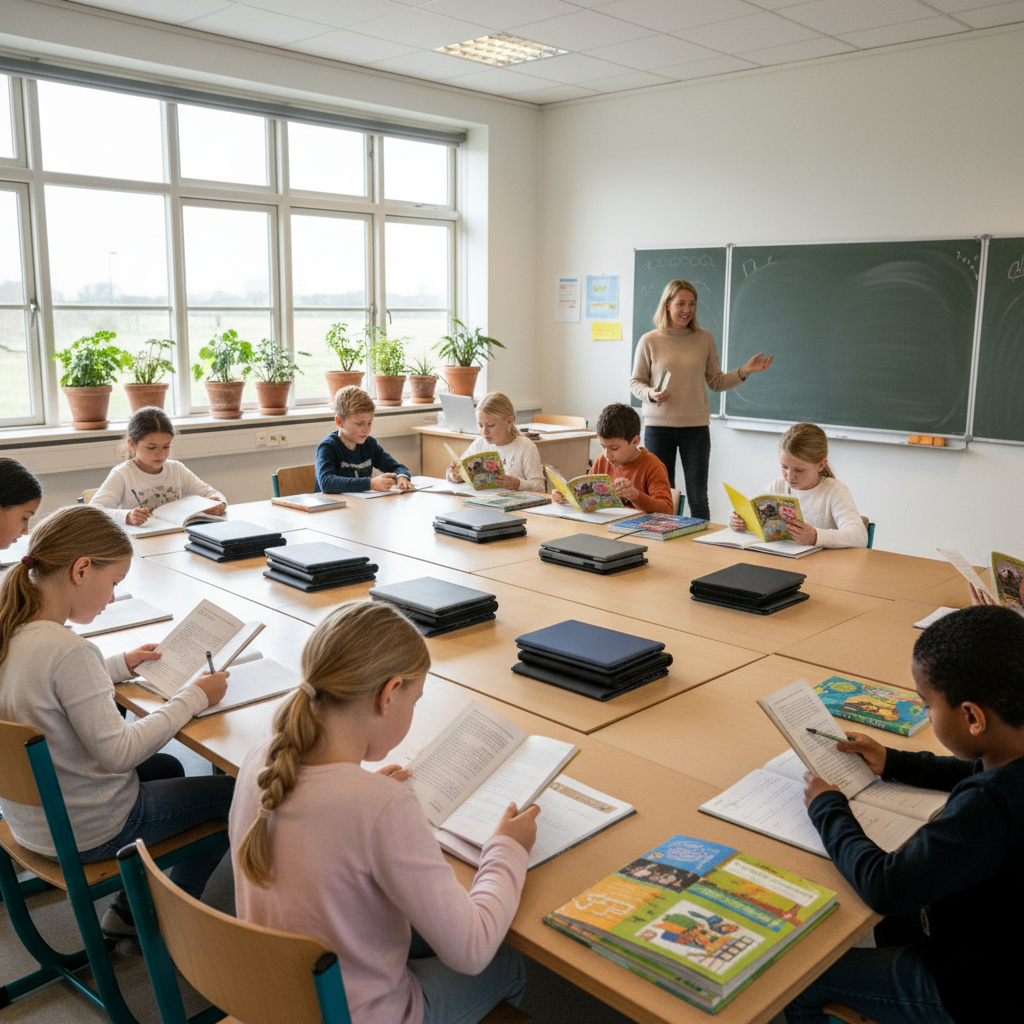
Studying is not a talent. It is a skill set.
Some children seem to sit down, remember things, and stay organised almost naturally. Others avoid work, get distracted, forget what they need, and feel overwhelmed quickly.
That does not mean they are less capable. It usually means they have not been taught how to learn in a clear, repeatable way yet.
The goal is not to create perfect students. It is to build independent learners who know how to manage themselves.
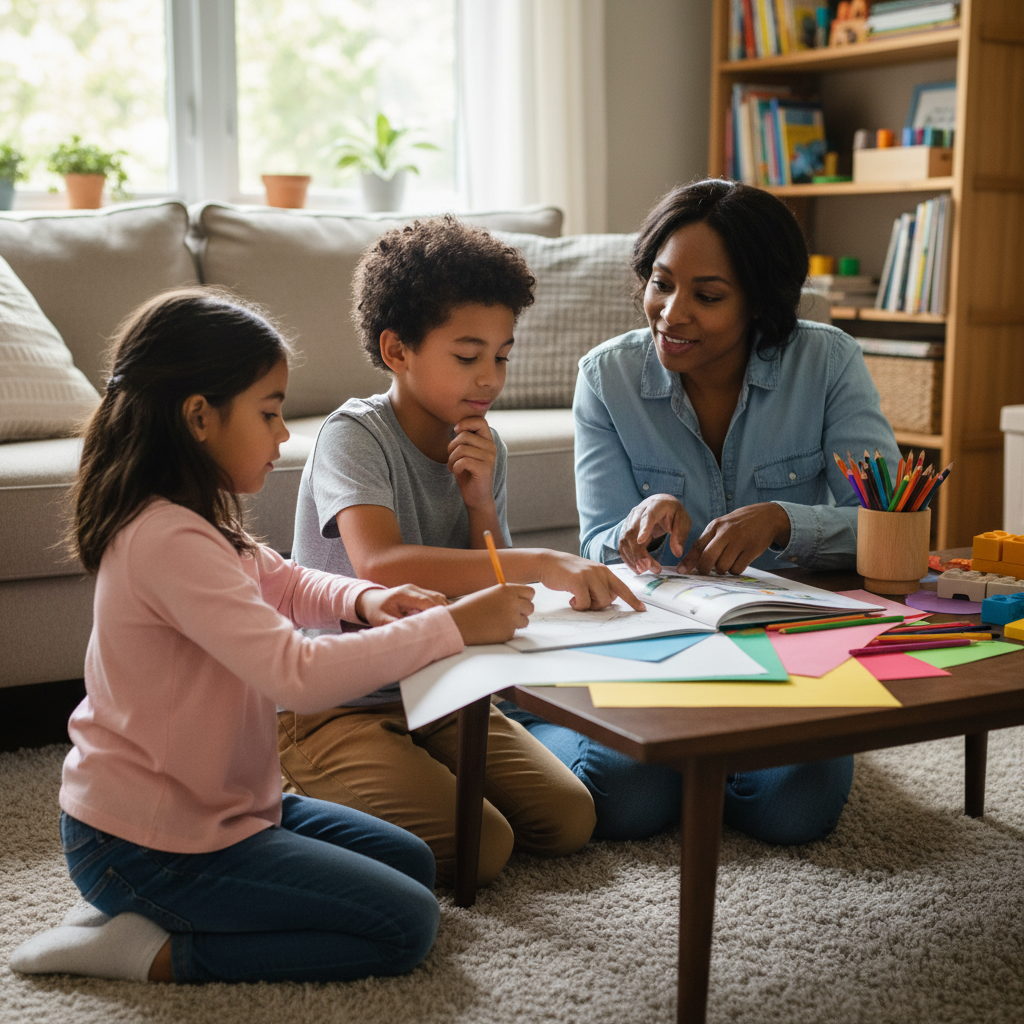
Step 1: Start With Energy, Not Effort
Before thinking about study skills, ask a more basic question: does your child have the energy to learn?
No routine works well if a child is tired, hungry, or overstimulated. Learning depends heavily on physical readiness.
Sleep
Primary-aged children usually need 9 to 11 hours.
Food
Protein, steady energy, and water support focus and stamina.
Calm
Less overstimulation means more mental space for learning.
Simple rules help: consistent bedtime, screens off an hour before bed, a calm evening routine, a solid breakfast, and water nearby when working.
Step 2: Teach How to Learn, Not Just What to Learn
Many children are told to revise without ever being shown how. That is where frustration starts.
Three of the most useful techniques are active recall, teaching it back, and breaking work into small chunks.
- Active recall: close the book and ask, What do I remember?
- Teach it back: explain the idea simply to someone else.
- Break it down: replace vague tasks with a clear next step like 10 minutes of maths.
These approaches reduce passivity and make learning more manageable.
Step 3: Use Time Properly
Children often struggle with time awareness. Timers help make work feel bounded and realistic.
The Pomodoro method works well for many families: 25 minutes of work followed by a 5-minute break. For younger children, start with 10 to 15 minutes instead.
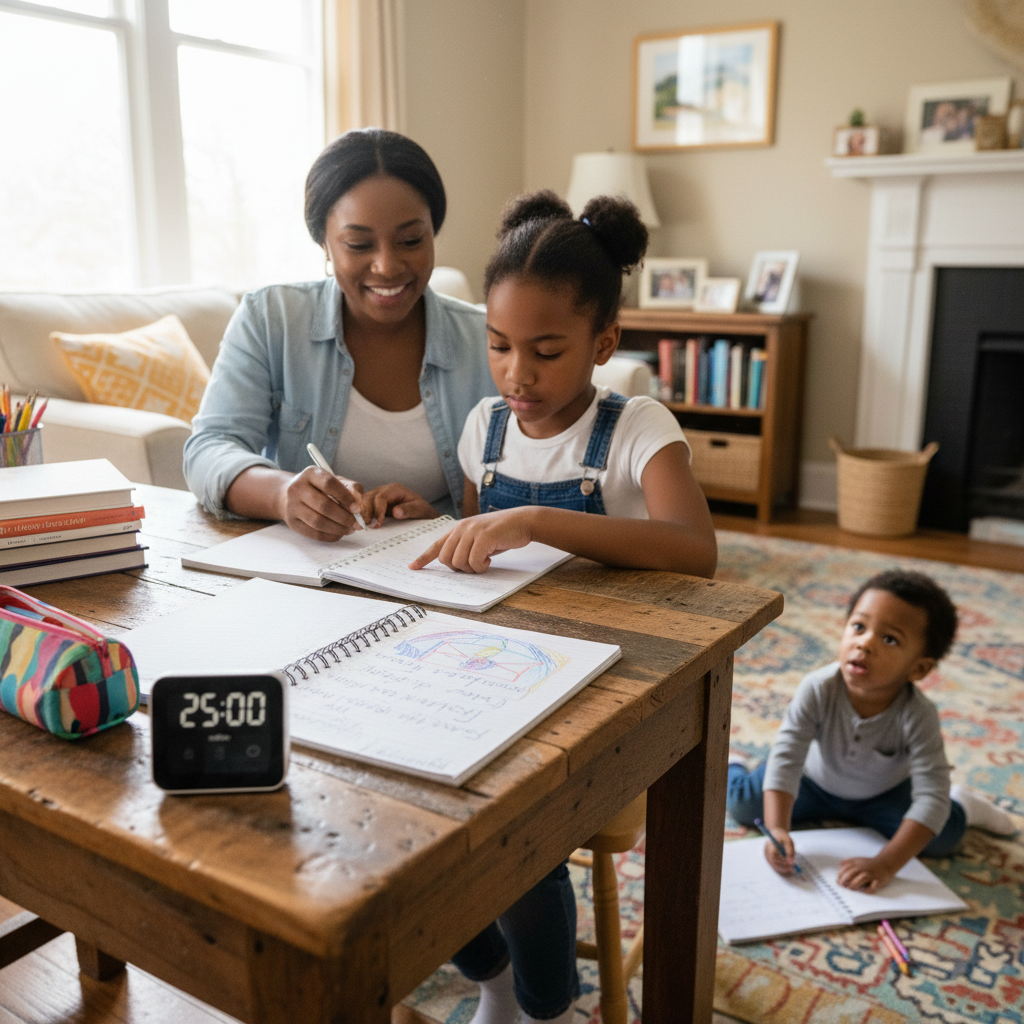
A visible timer or alarm helps children build focus and independence because the work has a clear beginning and end.
Step 4: Create a Simple Structure
Children do not need perfect organisation systems. They need predictable routines.
- Same study time each day
- Same place
- Same order, such as snack, work, then break
Routine lowers resistance because less energy is spent deciding when and how to begin.
Step 5: Sit Near, Not On Top Of Them
Support matters, but hovering often makes children feel watched rather than helped.
Try being nearby and available instead. That gives reassurance while still leaving room for independence.
Step 6: Change How You Talk About Learning
Language matters more than many parents realise.
Instead of
Just concentrate
Try
Let us figure out how to make this easier to focus on.
Instead of
You are not trying
Try
What is making this hard right now?
This shifts the conversation away from blame and toward problem-solving.
Step 7: Teach Recovery, Not Perfection
Children will get distracted, forget things, and lose focus. That is normal.
The more useful lesson is not never get off track. It is when you get off track, come back.
Common Mistakes Parents Make
- Doing the work for them
- Expecting instant independence
- Focusing only on results
- Using long study sessions that create burnout
These habits often create dependence rather than confidence.
Real progress is often small: sitting for 10 minutes, remembering one thing, or needing a bit less help than before.
Start Tonight Checklist
- Set a consistent bedtime
- Use a 10 to 15 minute timer for work
- Ask your child to explain something back to you
- Break homework into small chunks
- Sit nearby during study
- Focus on effort rather than outcome
Final Thought
Children do not usually struggle because they cannot learn. They struggle because adults often expect them to know how to learn without ever teaching the process clearly.
The lasting shift happens when you stop only helping them do the work and start helping them manage themselves.
A useful question to ask is this: am I helping my child do the work, or helping them learn how to manage themselves?