
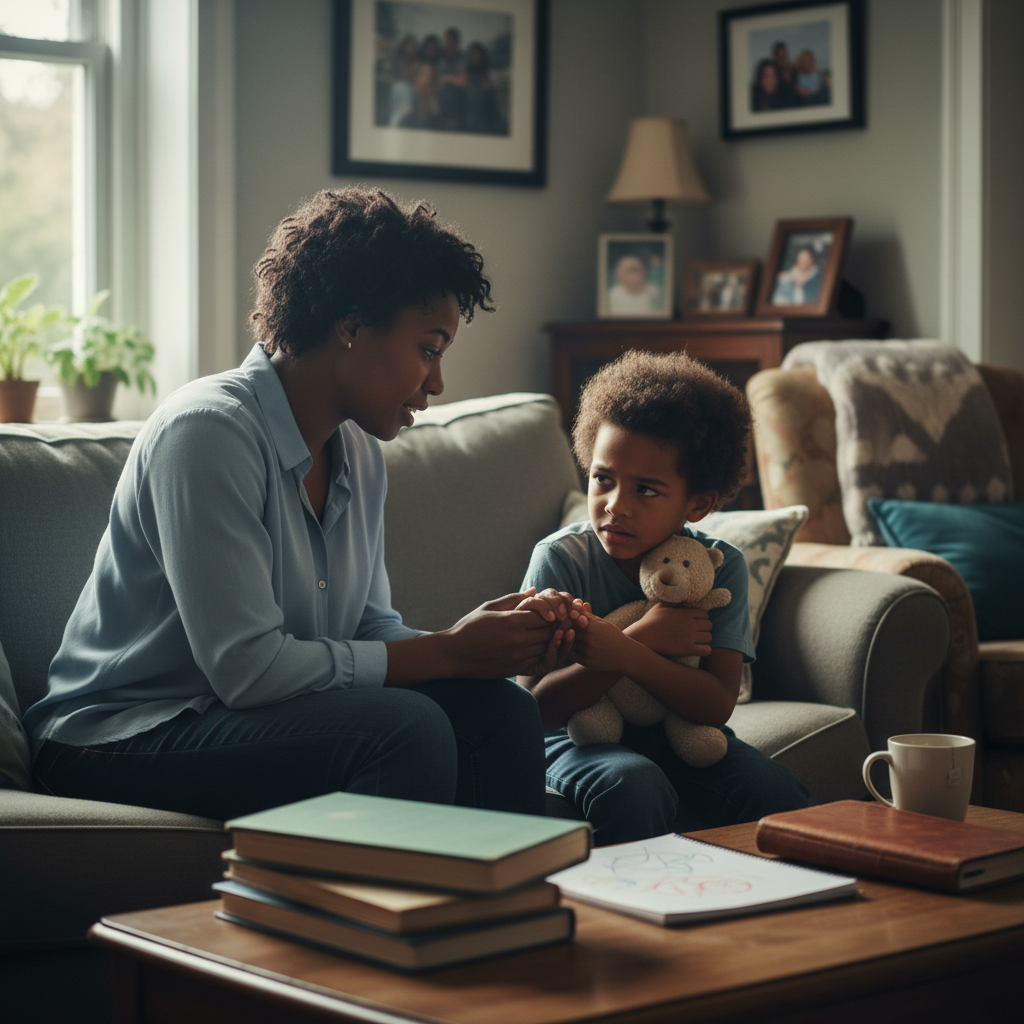
If your child seems worried, tense, or overwhelmed, you are not alone.
Anxiety in children is rising, and for many parents the hardest part is this: you can see your child struggling, but you are not sure how to help.
Most parents want to fix it, take the feeling away, and protect their child from the discomfort.
The goal is not to remove anxiety. It is to help your child learn how to manage it.
First: Understand What Anxiety Actually Is
Anxiety is not weakness. It is not bad behaviour. It is the brain trying to keep your child safe.
The problem is that sometimes the brain overestimates danger. So your child may feel worried about small things, become avoidant, complain of tummy aches or headaches, or become tearful and irritable even when there is no obvious reason.
The Common Mistake Parents Make
Out of love, many parents respond by reassuring constantly, removing the source of anxiety, or helping the child avoid whatever triggers the feeling.
That often helps in the short term, but over time it can make anxiety stronger because the child learns: I cannot handle this without help.
What Actually Helps, Backed by Research
01
Name what is happening, without panic
Instead of saying don’t worry, try saying your brain is feeling worried right now. This normalises the feeling and reduces fear of the feeling itself.
02
Validate first, then guide
Children need to feel understood before they can regulate. Start with I can see this feels really hard for you, then move to let’s figure it out together.
Validation does not mean agreeing the fear is real. It means acknowledging the feeling is real.
03
Teach simple regulation tools
Slow breathing, grounding, walking, or stretching all help because regulation comes through the body, not just through talking.
04
Do not avoid, support gradual exposure
Avoidance makes anxiety grow. Confidence builds when children face fears in small, manageable steps with support.
05
Change the inner voice
Anxious children often think I cannot do this or something bad will happen. Help them shift toward this feels hard, but I can try, and I have handled things before.
06
Do not rush the feeling away
Anxiety often passes faster when it is allowed rather than fought. Sometimes the most powerful response is simply: I am here with you while this passes.
07
Model calm, even when it is hard
Children mirror adult emotional states. Panic, frustration, and urgency raise anxiety. A steady tone and calm confidence help their nervous system settle.
Signs Your Child May Be Struggling With Anxiety
- Avoiding school or activities
- Frequent stomach aches or headaches
- Trouble sleeping
- Overthinking or needing constant reassurance
- Meltdowns over small things
Anxiety does not always look like obvious worry. Often, it shows up through behaviour.
When to Seek Extra Support
If anxiety is persistent, interfering with daily life, or getting worse over time, it is okay to seek professional support.
That is not failure. It is support at the right time.
Your child does not need you to eliminate anxiety. They need help learning: I can feel this, and still be okay.
Final Thought
Anxiety can feel overwhelming for both child and parent. But handled well, it can also become an opportunity to build resilience, self-awareness, and emotional strength.
The goal is not to raise a child who never feels anxious. It is to raise a child who knows how to face it, and move forward anyway.
Looking for more practical, research-backed parenting support? Explore our guides to help your child build confidence, resilience, and emotional strength.