The most important shift in education right now is not about finding the perfect curriculum. It is about recognising that modern children are experiencing learning differently, and systems everywhere are being forced to respond.
Look almost anywhere in the world and the same tensions are showing up. The UK is debating standards versus wellbeing. The US is grappling with inconsistency and disengagement. Australia is questioning its balance between skills and rigour. Scandinavia is facing declining results and rising anxiety. International schools are under pressure to prove outcomes.
Different systems. Different philosophies. And yet they are all facing many of the same problems.
This is no longer just a curriculum issue. It is a system-wide shift in how children are experiencing learning itself.

The Global Pattern
Across countries and curricula, familiar themes keep repeating.
- Declining engagement
- Rising anxiety and mental health concerns
- Increased behavioural challenges
- Reduced attention and focus
- Widening gaps between high and low performers
That should tell us something important. The issue is bigger than any one country or any one approach.
The Uncomfortable Truth
For decades, education systems debated which curriculum was best, how to improve results, and how to raise standards. But we are now facing a more difficult reality: even well-designed systems are struggling to meet the needs of modern children.
The challenge is not that children have become less capable. It is that the context around childhood has changed dramatically.
What Has Actually Changed
Today's learners are growing up with more stimulation, more screen exposure, less physical movement, more anxiety, and a much lower tolerance for passive learning. They are also more socially aware and often more sensitive to pressure.
Yet many systems are still structured around the needs and habits of a very different generation of learners.
More Stimulated
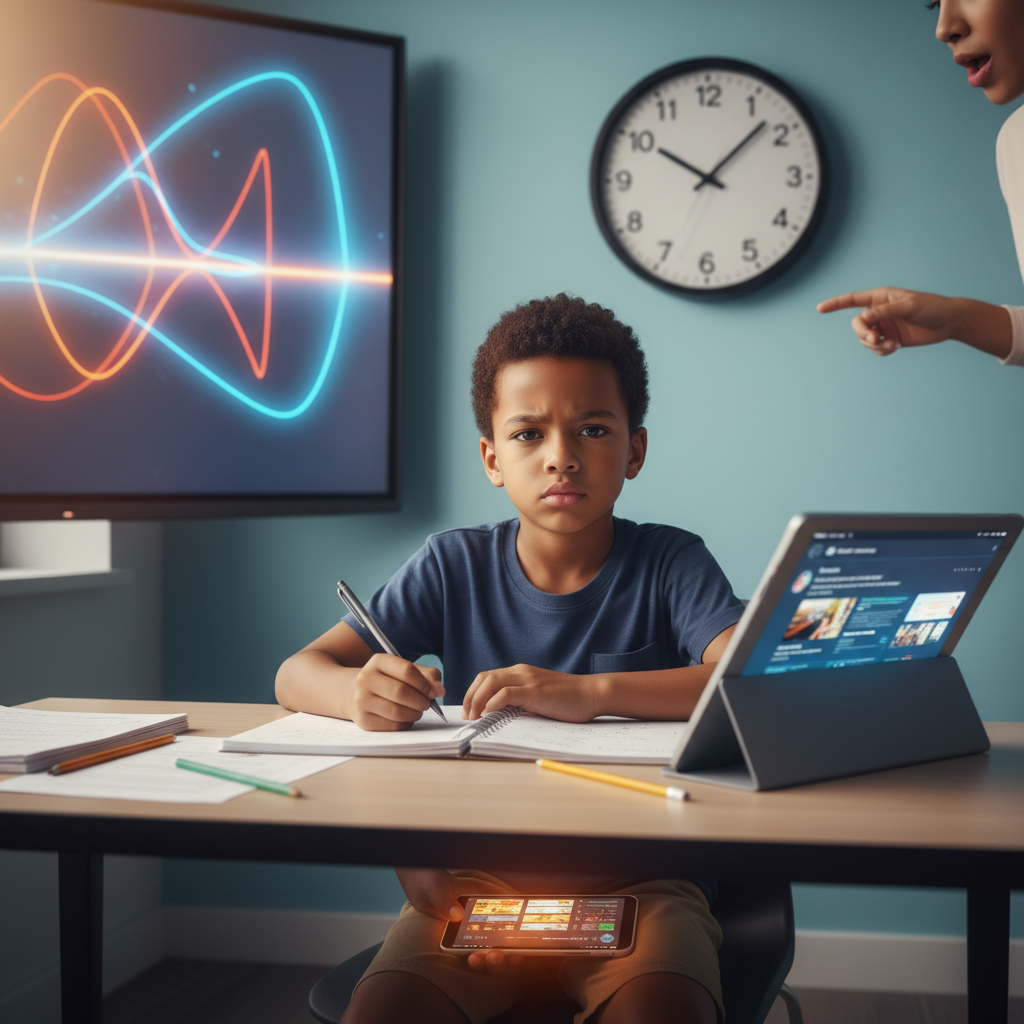
Technology and fast-paced environments are shaping attention differently.
Less Physical
Children are often moving less and regulating less effectively.
More Pressured
Children are more socially aware and more exposed to pressure.
Less Passive
Traditional passive learning holds attention less effectively than it once did.
The False Debate We Need To Leave Behind
For years, education has been framed as a set of binary choices: academic rigour versus wellbeing, structure versus creativity, discipline versus freedom.
That framing no longer works. Neither side is working particularly well on its own anymore.
The Emerging Global Trend
1. Regulation is becoming foundational
Focus is not just effort, and behaviour is not just choice. Schools are increasingly recognising that children need to be regulated enough to learn.
2. Engagement is becoming a performance driver
It is no longer enough to deliver content. Schools now have to capture attention, sustain interest, and create meaning.
3. Skills are overtaking content
Problem-solving, communication, and adaptability are becoming more important, yet remain underdeveloped in many systems.
4. The teacher role is shifting
Teachers are moving from pure knowledge delivery toward facilitator, regulator, and guide.
The Risk If We Do Not Adapt
If systems continue unchanged, behavioural challenges are likely to grow, disengagement will deepen, mental health issues will rise, and teacher burnout will accelerate.
Most importantly, children may leave school less prepared for life even if their paper results still look respectable.

So What Should We Prioritise Now?
1. Regulation before results
Children need to be calm enough, focused enough, and emotionally stable enough before learning can really begin.
2. Depth over volume
Less content overload and less excessive testing. More understanding, thinking, and application.
3. Communication as a core skill
Every child should leave school able to express ideas, ask questions, and engage in discussion.
4. Resilience must be taught
Children need explicit support in handling difficulty, recovering from failure, and persisting through challenge.
5. Balance structure with autonomy
Too much control drives disengagement. Too much freedom creates drift. The future likely lies in structured flexibility.
What This Means for Schools
Schools need to move from asking how to improve results to asking how to create learners who can thrive in uncertainty.
What This Means for Parents
Parents may need to think less about chasing the single best school and more about understanding their child's actual experience, building real-world skills at home, and prioritising confidence, communication, and adaptability alongside academic outcomes.
Final Thought
We are not simply seeing failures of individual systems. We are seeing a global mismatch between education and the modern child.
That changes the question entirely. The future will not be shaped by the curriculum that looks best on paper. It will be shaped by the children who can think, adapt, and navigate a changing world.
A useful question to leave with is this: if every system has strengths and weaknesses, what are we choosing to prioritise for our children now?