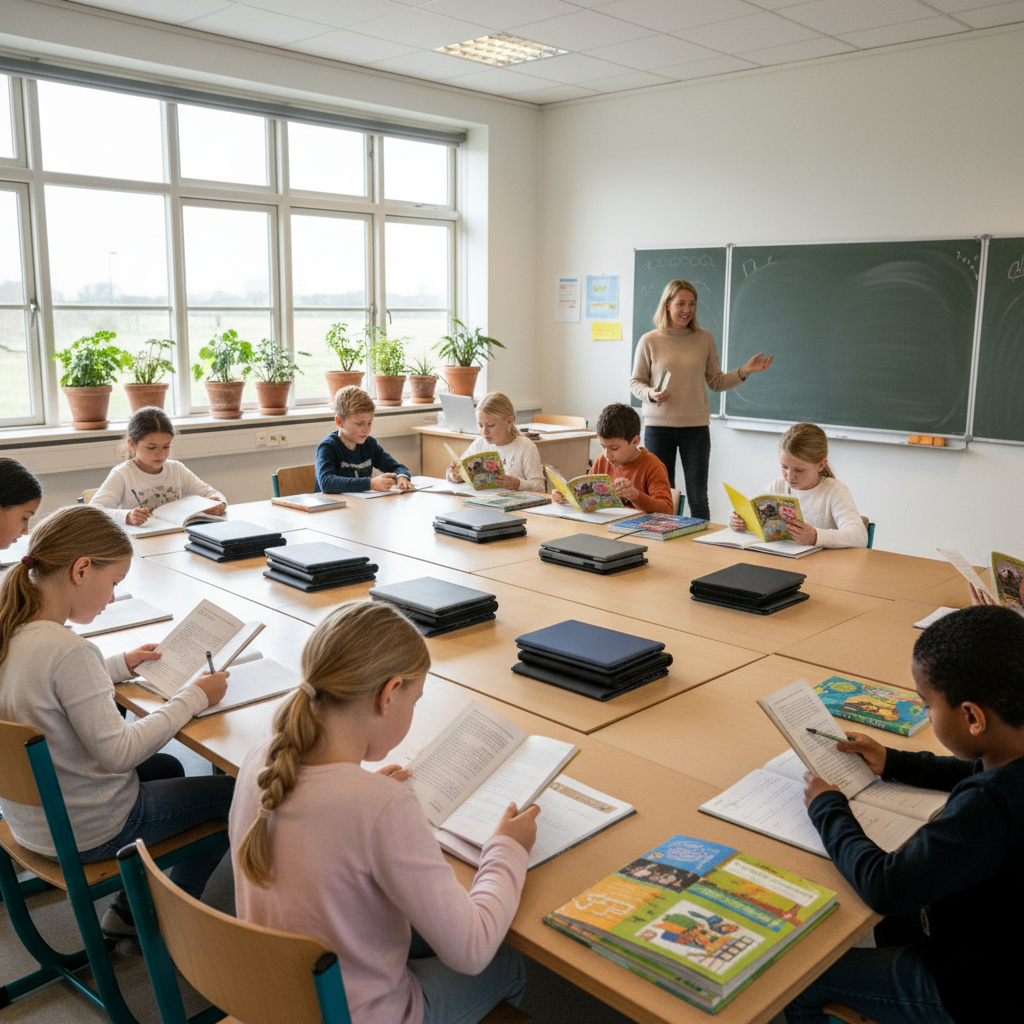
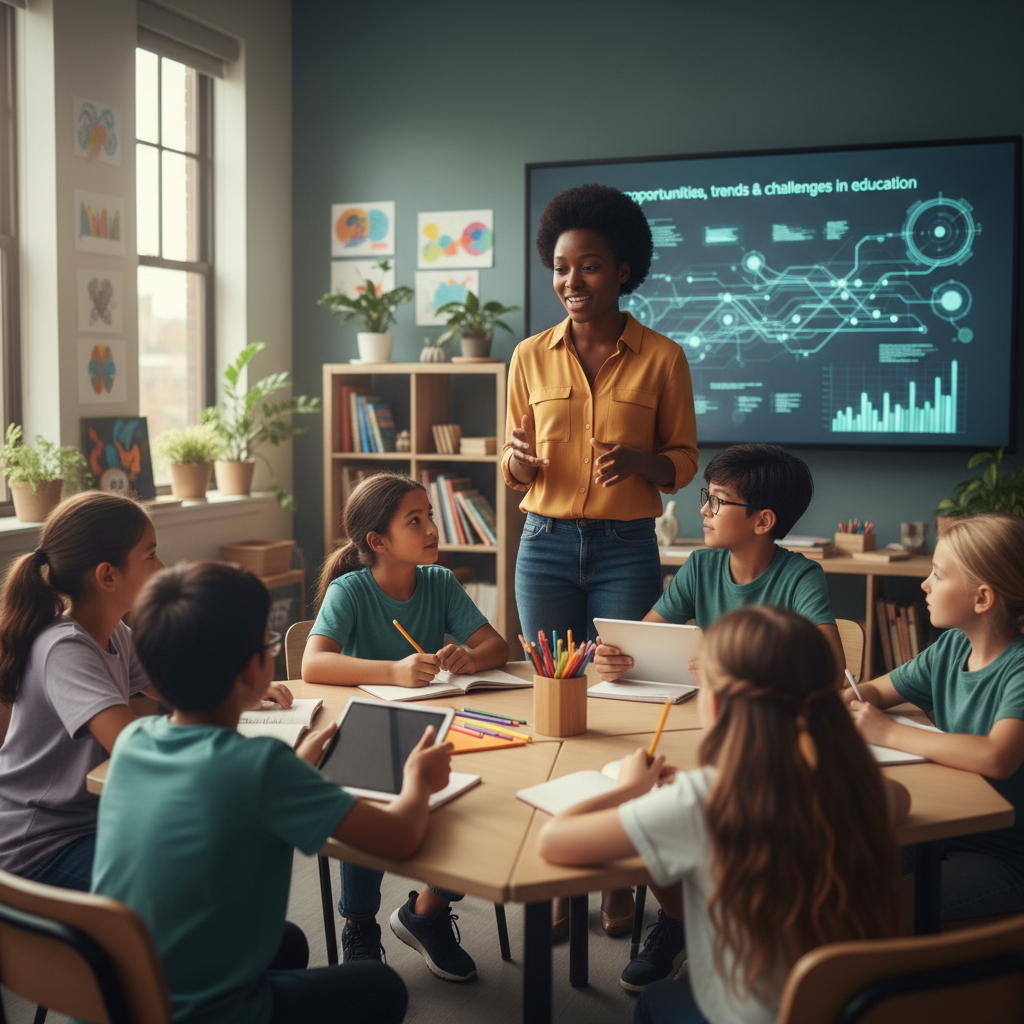
If you step back and look at education across Europe in 2026, a clear picture emerges.
We are not facing a single crisis. We are looking at a system in transition.
That transition is being shaped by technology, changing student needs, economic pressure, and global comparisons such as PISA, OECD analysis, and EU indicators.
The important point is that not all of these datasets are published yearly on the same timeline. So if you want to understand 2026 well, you need to read the latest available data carefully rather than assume every number is current to this exact year.
The real story in 2026 is not collapse. It is transition, unevenness, and growing pressure on systems that were designed for a different era.
The Macro Reality in Europe
The latest comparable EU-wide figures show a mixed picture.
- Public spending on education in the EU was 4.6% of GDP in 2022, according to the latest Eurostat release.
- Tertiary attainment among 25 to 34 year olds reached 44.1% in 2024, close to the EU 2030 target of 45%.
- Early leavers from education and training were 9.3% in 2024, which still represents around 3.1 million young people.
- Adult learning participation remains well below long-term ambitions, despite stronger policy attention to lifelong learning.
In other words, systems are expanding access and qualifications, but they are not doing so evenly or with the same quality of experience.
The Biggest Trends in 2026
1. Performance is stagnating or declining
PISA 2022 showed an unprecedented drop in mathematics across OECD countries and a sharp fall in reading, while science remained broadly stable on average.
That matters because it challenges a common assumption: more spending alone does not guarantee better outcomes. Systems are under pressure to adapt, and many have not yet found the right response.
2. The knowledge versus skills debate is still unresolved
PISA rewards application, not just memorisation. But systems with strong knowledge foundations still tend to perform better.
The real answer is not knowledge or skills. It is knowledge plus application. Schools that weaken core knowledge often get shallow thinking. Schools that rely only on recall often get poor transfer.
3. Wellbeing is now a central educational issue
Across Europe, rising anxiety, lower belonging, and increasing pressure are no longer side issues. They are shaping outcomes directly.
Even high-performing systems are not insulated from this. Strong results do not automatically mean healthy student experience.
4. Inequality remains one of the biggest drivers of outcomes
OECD and EU evidence continues to show that family background strongly influences educational success.
That means many systems are widening participation without fully equalising opportunity. Access has improved more than fairness of outcome.
5. Digital transformation is real, but its impact is mixed
Technology is everywhere in schools, but OECD findings keep pointing to the same reality: digital access on its own does not guarantee better learning.
Tech without pedagogy often becomes distraction. Tech with clear instructional design can be genuinely useful.
6. Teacher pressure is becoming a system-level risk
Workload, retention, recruitment, and emotional pressure are no longer isolated staffing issues. They are central system constraints.
If teacher capacity weakens, every other reform becomes harder to implement well.
The Biggest Challenges
1. Systems were designed for a more stable era
Many education systems were built for standardisation, predictability, and relatively fixed expectations. They now face greater diversity, more complexity, and faster change.
2. There is an engagement problem
Many students struggle with sustained attention and are less motivated by traditional teaching patterns than previous generations. Schools have not fully adapted to this shift.
3. The pressure-performance trade-off is still unresolved
Some systems produce strong results with high stress. Others produce lower stress but weaker outcomes. The real challenge is achieving both performance and wellbeing.
4. Schools are overloaded with initiatives
Constant reform, changing priorities, and policy churn often create shallow implementation rather than real improvement.
The Biggest Opportunities
1. Teaching students how to learn
Metacognition, memory, retrieval practice, and learning science remain one of the highest-impact, lowest-cost opportunities in education.
2. Whole-child education
Regulation, wellbeing, and emotional literacy are increasingly being recognised as core conditions for learning, not optional extras.
3. Early intervention
The data remains clear: early support has the highest long-term return, whether in early years development, special educational needs, or emotional wellbeing.
4. Teacher development
Teacher quality remains the most powerful in-school lever. Better training in learning science, behaviour, and human development is one of the strongest improvement opportunities available.
5. Better use of assessment and technology
The opportunity is not simply more testing or more technology. It is better use of both: more formative assessment, clearer progress information, and digital tools that are tied to sound pedagogy.
6. Inclusion as a whole-school model
There is a growing shift from treating inclusion as a department to treating it as a culture. That is one of the most important moves education can make well over the next few years.
The Bigger Pattern
Across all of this data, one theme stands out.
Education systems are still relatively good at delivering content, but much less consistent at developing humans.
The future requires emotional regulation, adaptability, self-awareness, and critical thinking alongside knowledge. These are exactly the areas many traditional systems have not prioritised strongly enough.
Final Thought
If you zoom out far enough, the real story of education in 2026 is this: we are moving from an industrial model toward a more human model.
From standardisation toward personalisation. From control toward understanding.
The real question is no longer how do we improve results. It is how do we build systems that actually work for the children we have today.
Schools that adapt early are likely to perform better, retain staff more effectively, and produce more resilient, capable students.
Want help translating these global trends into a strategy for your school? Explore our leadership and school improvement guides.